- Trump threatened new tariffs on Canada over smoke affecting parts of the United States.
- The source reported about 888 active wildfires in Canada, including more than 190 in Ontario.
- Ontario’s premier said firefighting crews, water bombers and helicopters were being deployed.
US President Donald Trump has threatened to impose new tariffs on Canada, linking the measure to smoke from widespread Canadian wildfires that has reduced air quality in several northern US cities.
In a Truth Social post, Trump described the air entering the United States as polluted and unhealthy, and accused Canada of what he called “willful negligence” in maintaining forests and brush. He said he would contact Canadian Prime Minister Mark Carney to seek an explanation.
The Canadian Wildland Fire Information System reported that about 888 fires were active in Canada as of Friday, with most described as out of control. More than 190 fires were burning in Ontario, while wildfires were also reported in British Columbia. The source said nearly three million hectares of land had been affected nationwide.
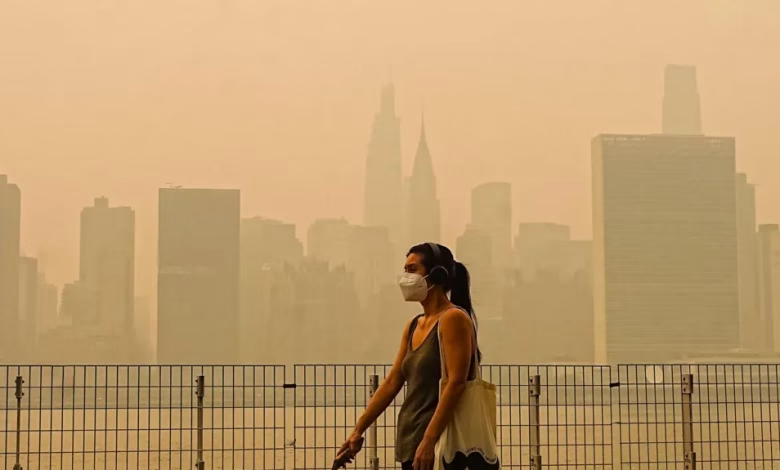
Smoke from fires in north-western Ontario has spread into parts of the United States, including Minnesota, Michigan, Pennsylvania, Ohio and New York. Air-quality alerts were issued in several areas, leading to cancellations or changes to outdoor activities and, in some places, travel disruption caused by poor visibility.
Canadian response
Ontario Premier Doug Ford urged US lawmakers to provide assistance rather than criticism, saying Canada had supported the United States during earlier emergencies. He said more than 150 fire crews, alongside water bombers and helicopters, were involved in the Ontario response.
Carney said climate change was a shared responsibility that included the United States. The report said Canada had not issued a direct response to Trump’s tariff threat.
Four Republican lawmakers had also written to Canadian officials, arguing that stronger action was needed on forest management and wildfire prevention. However, scientists cited in the report said the causes and spread of wildfires were more complex than those claims suggested.
Experts said smoke moves according to weather patterns rather than national borders, while fires in remote forests can be difficult to identify and contain. They also pointed to hot weather, below-average rainfall, lightning and longer-term climate conditions as factors contributing to severe fire seasons.
Evacuations have been ordered in parts of northern Ontario, including for First Nations communities. Ford said 10 communities had been evacuated and reported that no lives had been lost.