Oforikrom MP questions design and spending of Nkoko Nkitinkiti initiative

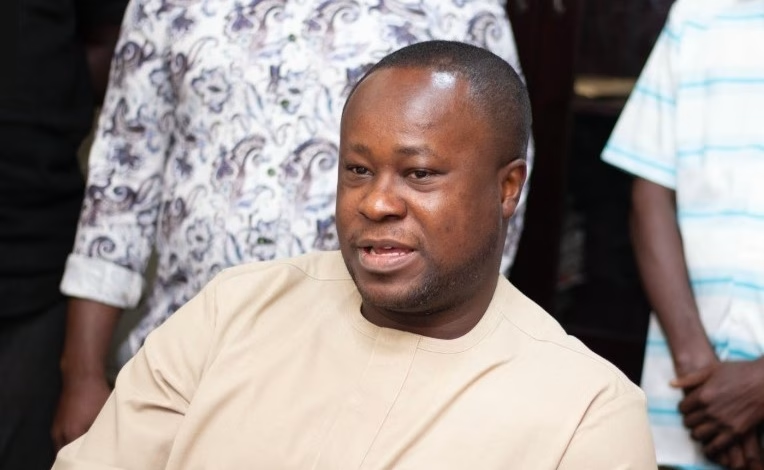
- Oforikrom MP Michael Kwasi Aidoo said the Nkoko Nkitinkiti initiative should have prioritised domestic poultry production.
- He argued that support should be directed to poultry farmers through financing, training, technology and infrastructure.
- Mr Aidoo alleged that gaps in training, feed access and market opportunities limited the programme’s effectiveness.
Michael Kwasi Aidoo, the Member of Parliament for Oforikrom, has criticised the government’s Nkoko Nkitinkiti initiative, saying its design did not adequately address the challenges facing Ghana’s poultry industry.
Responding to comments by Food and Agriculture Minister Eric Opoku, who had urged beneficiaries to treat the birds as a business and sell most of them rather than consume them, Mr Aidoo argued that the programme’s primary purpose should have been to raise local poultry production and reduce reliance on imports.
The MP said that, in his view, spending more than GH¢200 million on a scheme whose beneficiaries may consume birds rather than expand production meant the intervention had “failed from the start”.
Mr Aidoo said Ghana’s central poultry-sector challenge was heavy dependence on imported chicken, which he put at about US$600 million annually. He argued that public interventions should instead support established poultry farmers and encourage new investors to enter the sector.
He alleged that the distribution of birds through district assemblies had become politicised, with birds going to supporters of the governing National Democratic Congress. According to Mr Aidoo, this meant some recipients regarded the birds as a government reward rather than stock for a commercial poultry venture.
Those allegations were made by the MP in his comments on the programme; the supplied material does not include a response from the government, the ministry or the district assemblies.
Mr Aidoo further claimed that some beneficiaries had insufficient technical knowledge to rear poultry and received little or no training or extension assistance. He said difficulties in obtaining feed, as well as a lack of ready markets, had led some recipients to consume the birds.
He proposed that funds allocated to the initiative be channelled through banks as low-interest loans for poultry farmers and prospective entrants with viable business plans. In addition to finance, he called for investment in training, technology and infrastructure.
The Oforikrom MP maintained that a more structured approach to poultry financing and farmer support would be more likely to increase domestic output and reduce imports over time.