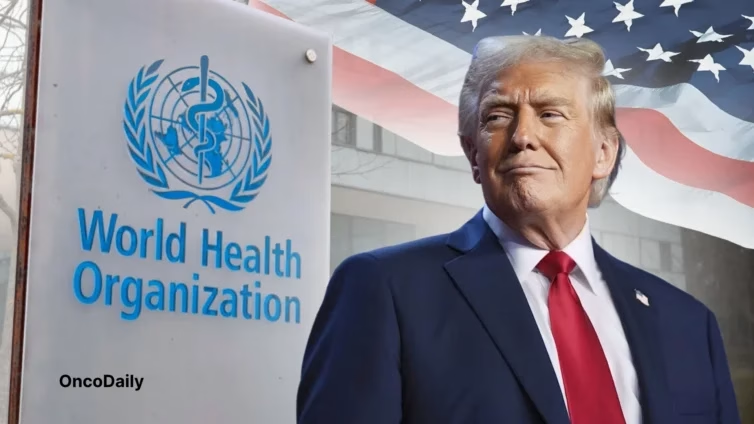
- The U.S. has officially withdrawn from WHO, following an executive order signed by former President Trump
- Washington historically contributed up to $988 million annually, about 14% of WHO’s budget
- Loss of U.S. funding threatens global health programs, including polio eradication and TB initiatives
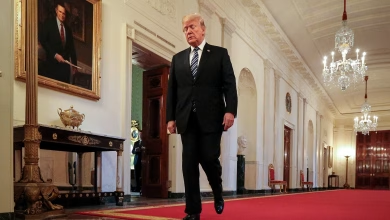
The United States has officially withdrawn from the World Health Organization (WHO), following through on an executive order signed by former President Donald Trump last year, raising concerns about the future of global health financing.
President Trump had repeatedly criticised the WHO, accusing it of being overly “China-centric” in its handling of the COVID-19 pandemic. This is not the first attempt by the U.S. to leave the organisation. In July 2020, months after WHO declared COVID-19 a global pandemic, President Trump announced a similar withdrawal. However, because WHO rules require a one-year notice period, the move never took effect and was later reversed by President Joe Biden when he assumed office in 2021.
This time, the withdrawal is official, ending one of WHO’s largest funding relationships. The U.S. has historically been among WHO’s top donors, contributing between $160 million and $815 million annually over the past decade. For the 2024–2025 budget cycle, the U.S. was projected to provide about $988 million, roughly 14 percent of WHO’s $6.9 billion budget.
Health experts warn that the loss of U.S. funding could severely impact critical global health programmes, including polio eradication, maternal and child health initiatives, and research to identify and contain emerging viral threats. WHO documents indicate that U.S. contributions fund around 95 percent of the organisation’s tuberculosis work in Europe and over 60 percent of TB programmes in Africa, the Western Pacific, and at WHO headquarters in Geneva.
Since the executive order was signed, WHO has tried to draw down U.S. funds to cover previously approved expenditures, but many of these efforts have been delayed or unsuccessful. Washington has not paid its assessed contributions for 2024 and 2025, resulting in widespread job losses within the organisation.
WHO legal advisers argue that the U.S. is still obligated to settle arrears estimated at $260 million (£193 million), but Washington has rejected this claim. U.S. authorities maintain that all government funding to WHO has ended, American personnel and contractors have been recalled from WHO offices worldwide, and hundreds of official engagements with the organisation have been suspended.
The U.S. exit is expected to have significant consequences for developing countries, particularly in Africa. Several governments are reassessing health and education programmes following cuts to USAID funding. Ghana, for example, had anticipated receiving over $150 million in USAID support last year.
Experts warn that the U.S. withdrawal could further limit alternative funding for health interventions, placing additional strain on already fragile health systems across the continent.