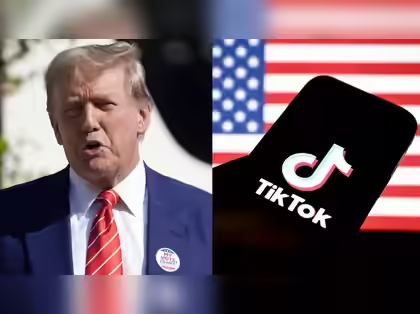
- Trump claims a group of wealthy investors is ready to acquire TikTok
- U.S. law mandates ByteDance sell TikTok by September 17, 2025
- Trump delayed the law’s enforcement multiple times via executive action
Former U.S. President Donald Trump has claimed he has secured a potential buyer for TikTok, the popular video-sharing app that was banned in the United States over national security concerns.
Speaking in a Fox News interview, Trump said a group of “very wealthy individuals” is prepared to purchase the platform. “I’ll tell you in about two weeks,” he added, without naming the interested party.
Any potential sale would still require approval from the Chinese government, though Trump expressed confidence that Chinese President Xi Jinping “will probably go along with it.” Earlier this month, Trump postponed for a third time the enforcement of a law requiring TikTok’s sale.
Under the most recent extension, TikTok’s parent company, ByteDance, must finalize a sale by September 17.
The BBC has reached out to TikTok for comment.
An earlier attempt to sell the app to an American firm collapsed in April due to tensions between Washington and Beijing, particularly over Trump’s tariffs. It remains unclear whether the current potential buyer is the same as the one involved in the earlier negotiations.
Congress passed the law mandating the sale of TikTok in April last year, citing concerns that the app could share U.S. user data with the Chinese government—an allegation both TikTok and ByteDance have denied.
Although Trump had been a vocal critic of TikTok during his first term, he later credited the app with helping boost his popularity in the 2024 election and has since supported keeping it available in the U.S.
While the law was originally set to take effect on January 19, Trump has repeatedly delayed its implementation through executive actions, drawing criticism for sidestepping congressional authority.
TikTok challenged the law’s constitutionality but ultimately lost its appeal at the U.S. Supreme Court.