North Korean defectors describe K-pop’s underground appeal despite restrictions

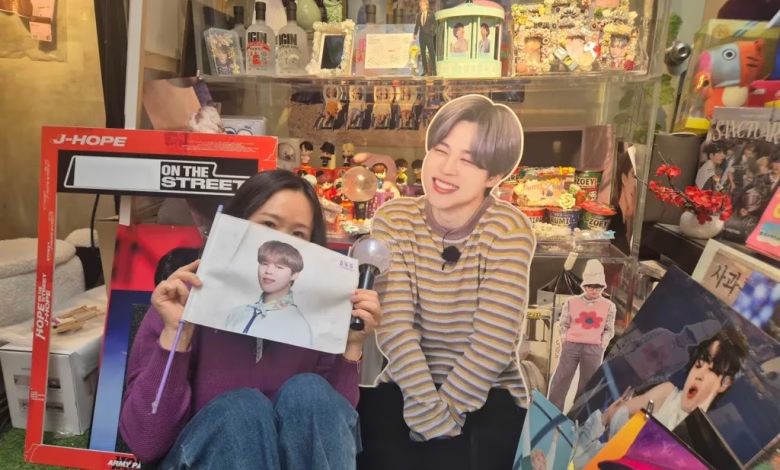
- Defectors said South Korean music and programmes circulated covertly through broadcasts, memory cards and music players.
- Several interviewees said K-pop artists including BTS, Blackpink, Teen Top and Girls’ Generation were known in North Korea.
- A cited 2023 survey found that 98% of defectors had watched South Korean dramas or films while in North Korea.
- Interviewees said exposure to South Korean media influenced their view of life and personal expression beyond North Korea.
North Korean defectors have described how K-pop and other South Korean entertainment reached audiences inside the country despite state restrictions, offering some people a rare glimpse of life beyond its borders.
In accounts published by MyJoyOnline, defectors now living in South Korea said songs, television programmes and performances were shared covertly through television signals, MP3 players and small memory cards. They said many listeners did not know the names of artists or songs, but were drawn to the music, lyrics and dance performances.
Hannah Oh, who left North Korea in 2019, said foreign media was consumed at considerable risk. She recalled carrying an empty memory card alongside one containing South Korean music in case she was stopped. She said students found watching South Korean material could be subjected to public criticism sessions and detention.
Another defector, Kang Gyu-ri, said she watched South Korean programmes when television reception was available in the coastal area where she lived. She said BTS’s 2020 song Dynamite became widely known among young people despite its English lyrics, while dance moves associated with performers such as Teen Top were copied by teenagers.
The report said South Korean content has long been viewed by North Korean authorities as a threat to the state’s tightly controlled information environment. Defectors interviewed for the article said restrictions had become more severe in recent years, with people becoming more cautious about sharing foreign media.
The article also cited a 2023 survey in which 98% of defectors said they had watched South Korean dramas or films while still in North Korea. About 80% said the exposure had increased their curiosity about South Korea and influenced habits including speech and fashion.
Some of those interviewed said South Korean music later helped them adjust after leaving North Korea. Lee Yeon-su, who now lives in South Korea, said attending BTS concerts had given her a sense of being able to support an artist by personal choice. She said this would have been difficult to imagine while growing up in North Korea, where public events and cultural life were closely controlled.
The defectors’ accounts also describe K-pop as more than entertainment. Several said music and television programmes shaped their understanding of personal expression, relationships and life in South Korea, while offering hope during periods of isolation and uncertainty.
MyJoyOnline’s report includes serious claims of punishments linked to South Korean media consumption, including reported executions. Those claims require independent verification before being presented as established fact.