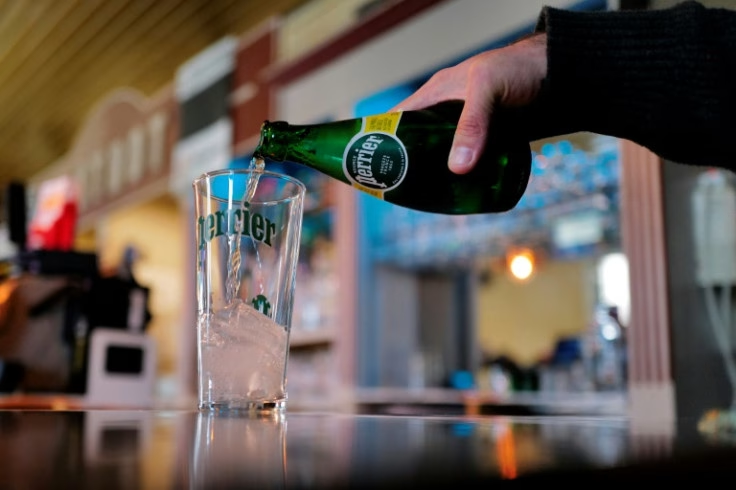
The Swiss multinational has faced scrutiny over its handling of popular mineral water brands—such as Perrier, Hépar, and Contrex—after breaching EU rules that tightly regulate how natural mineral water can be processed.
The Senate report criticized both Nestlé Waters and the French state for a serious lack of transparency. “In addition to Nestlé Waters’ opacity, it is essential to highlight the state’s failure to be transparent—toward local and European authorities and, more importantly, toward the French public,” the report stated.
The findings came after a six-month parliamentary inquiry, which included over 70 hearings.
“This cover-up was part of a deliberate strategy, discussed as early as the first interministerial meeting on mineral waters on October 14, 2021,” the report continued, adding that even after nearly four years, full transparency has not been achieved.
Perrier—an internationally recognized brand known for its signature green bottles and origins in southern France—was acquired by Nestlé in the early 1990s.
Involvement of Senior Government Figures
According to the report, Nestlé Waters’ new management discovered in late 2020 that banned methods, including ultraviolet treatment and activated carbon filtering, had been used at multiple sites. These treatments violate EU laws that prohibit any process that alters the natural characteristics of mineral water.
Nestlé informed the French government in mid-2021 and submitted a corrective plan. Discussions reportedly reached the Élysée Palace, the office of President Emmanuel Macron.
Authorities eventually approved a plan in early 2023 to switch to microfiltration—permissible under certain conditions—despite concerns that even this method might compromise the water’s integrity.
“Even though disinfecting mineral water constitutes consumer fraud, no legal action was taken after the 2021 revelations,” the Senate report noted.
The report also stated that the decision to permit microfiltration below the 0.8-micron threshold came from the “highest level of the state,” implicating the office of then-Prime Minister Élisabeth Borne, although it noted she may not have been fully informed.
Additionally, the report alleged that President Macron’s office had been aware since at least 2022 that Nestlé had been breaching regulations for years. Alexis Kohler, the President’s chief of staff at the time, reportedly held meetings with Nestlé executives.
In 2024, Nestlé Waters admitted it had used banned filtering techniques. To avoid prosecution, the company paid a €2 million ($2.2 million) settlement related to its use of unauthorized water sources and treatments. Nestlé claimed at the time that the filters had been approved by regulators and that the water remained “pure.”
The French government, including its highest offices, helped suppress a scandal involving Nestlé’s treatment of mineral water, according to a French Senate investigation released on Monday.
The Swiss multinational has faced scrutiny over its handling of popular mineral water brands—such as Perrier, Hépar, and Contrex—after breaching EU rules that tightly regulate how natural mineral water can be processed.
The Senate report criticized both Nestlé Waters and the French state for a serious lack of transparency. “In addition to Nestlé Waters’ opacity, it is essential to highlight the state’s failure to be transparent—toward local and European authorities and, more importantly, toward the French public,” the report stated.
The findings came after a six-month parliamentary inquiry, which included over 70 hearings.
“This cover-up was part of a deliberate strategy, discussed as early as the first interministerial meeting on mineral waters on October 14, 2021,” the report continued, adding that even after nearly four years, full transparency has not been achieved.
Perrier—an internationally recognized brand known for its signature green bottles and origins in southern France—was acquired by Nestlé in the early 1990s.
Involvement of Senior Government Figures
According to the report, Nestlé Waters’ new management discovered in late 2020 that banned methods, including ultraviolet treatment and activated carbon filtering, had been used at multiple sites. These treatments violate EU laws that prohibit any process that alters the natural characteristics of mineral water.
Nestlé informed the French government in mid-2021 and submitted a corrective plan. Discussions reportedly reached the Élysée Palace, the office of President Emmanuel Macron.
Authorities eventually approved a plan in early 2023 to switch to microfiltration—permissible under certain conditions—despite concerns that even this method might compromise the water’s integrity.
“Even though disinfecting mineral water constitutes consumer fraud, no legal action was taken after the 2021 revelations,” the Senate report noted.
The report also stated that the decision to permit microfiltration below the 0.8-micron threshold came from the “highest level of the state,” implicating the office of then-Prime Minister Élisabeth Borne, although it noted she may not have been fully informed.
Additionally, the report alleged that President Macron’s office had been aware since at least 2022 that Nestlé had been breaching regulations for years. Alexis Kohler, the President’s chief of staff at the time, reportedly held meetings with Nestlé executives.
In 2024, Nestlé Waters admitted it had used banned filtering techniques. To avoid prosecution, the company paid a €2 million ($2.2 million) settlement related to its use of unauthorized water sources and treatments. Nestlé claimed at the time that the filters had been approved by regulators and that the water remained “pure.”