- Severe response if Iran sends missiles to Russia.
- Russia relies on Iran and North Korea for arms.
- Iranian drones and North Korean missile fragments found.
- Increased attacks on Ukrainian infrastructure.
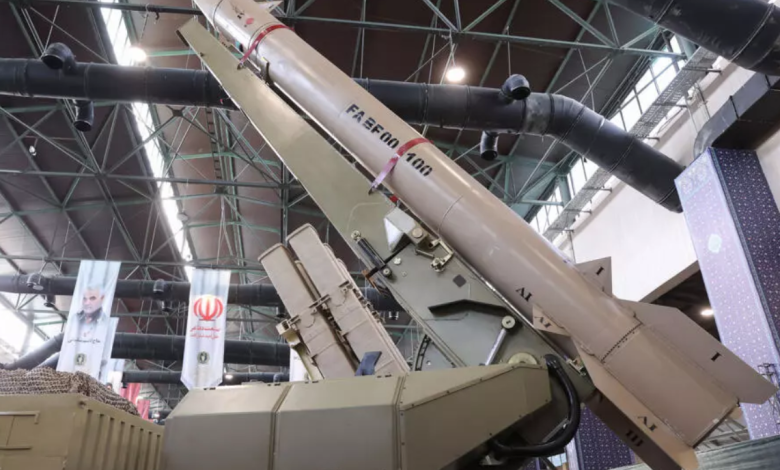
The European Union is investigating claims that Iran has provided Russia with ballistic missiles for use in Ukraine, based on “credible” intelligence from its allies. Tehran has denied the allegations, while Moscow has not directly addressed the issue.
The European Union announced on Monday that it is investigating “credible” intelligence from its allies suggesting that Iran has supplied Russia with ballistic missiles for its ongoing conflict in Ukraine. The EU’s announcement follows recent reports from US media indicating that Washington believes Iran has transferred these weapons to Russia. While Tehran has firmly rejected the allegations, Moscow has not explicitly denied the claims.
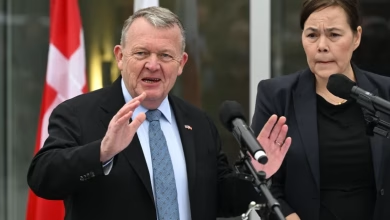
Peter Stano, the EU spokesperson, confirmed the receipt of credible intelligence about the alleged missile delivery. He stated that the EU is working with member states to verify the information. If confirmed, the missile delivery would represent a significant escalation in Iran’s support for Russia’s military actions against Ukraine, potentially leading to severe consequences.
Stano further emphasized that the EU’s position is clear: if the allegations are verified, the European Union will respond swiftly in coordination with international partners. This response could include the imposition of new and significant restrictive measures against Iran, reflecting the seriousness with which the EU views the potential violation of international norms.
In response to the allegations, Iran’s foreign ministry has strongly denied any involvement in arms transfers to Russia. Iranian foreign ministry spokesman Nasser Kanani rejected the claims during a press conference, asserting that Iran has not engaged in exporting arms to any party in the conflict.
The Kremlin has not issued a direct denial regarding the reports of missile transfers. Kremlin spokesman Dmitry Peskov commented on the Wall Street Journal report by expressing skepticism about the accuracy of such information. He acknowledged that while Iran is an important partner, the specifics of the report have not been confirmed.
The situation is further complicated by ongoing tensions between the West and Iran. The EU has already imposed sanctions on Iran for supplying drones to Russia, and the potential revelation of ballistic missile transfers could lead to even harsher measures. The investigation by the EU reflects a broader concern about Iran’s involvement in the conflict and its impact on international relations.
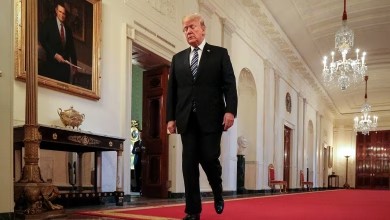
The United States has warned that any missile deliveries from Iran to Russia would trigger a “severe” response and undermine Tehran’s efforts to mend relations with the West, especially after the recent election of reformist president Masoud Pezeshkian.
In the face of stringent Western sanctions, Moscow has increasingly relied on Iran and North Korea for weapons supplies to sustain its military operations in Ukraine. Ukraine reports frequent attacks from Iranian-designed Shahed drones and has discovered fragments of North Korean missiles within its borders.
The alleged missile transfer coincides with an escalation in Russia’s bombing campaign against Ukraine’s critical infrastructure as winter approaches.