
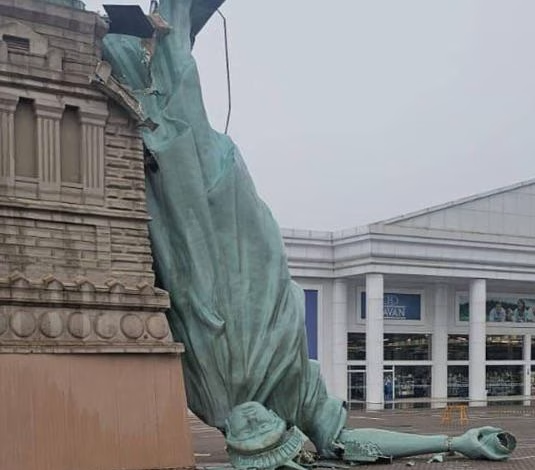
- 24-metre Statue of Liberty replica outside Havan store collapses due to gusty winds
- No injuries reported as area was immediately secured by staff
- Debris cleared without disrupting store operations; internal investigation launched
A 24-metre replica of the Statue of Liberty in southern Brazil collapsed after being battered by strong, gusty winds, with a video of the incident widely circulating on social media.
The replica, installed outside a Havan megastore in Guaíba, in the state of Rio Grande do Sul, was brought down as wind speeds reached between 80 and 90 km/h. Guaíba Mayor Marcelo Maranata confirmed the collapse, noting that no injuries were reported because the area had been quickly secured by Havan staff.
Footage shared online shows the statue gradually leaning forward before crashing into an empty parking lot as winds exceeded 90 km/h. Vehicles can be seen continuing along a busy nearby road at the time of the collapse. The replica stood close to a fast-food outlet.
While the 11-metre base remained intact, swift action by onlookers and staff to clear vehicles from the area helped prevent damage or injuries.
In a video posted on Instagram, Mayor Maranata said the city was struck by intense wind gusts on Monday, December 15. He added that the Civil Defense and the Department of Infrastructure were fully mobilized to respond to incidents and ensure public safety, urging residents to contact Civil Defense in emergencies.
The structure, owned by the Havan retail chain, was located in the store’s parking area. The company said the site was immediately cordoned off in line with safety protocols, with debris removal beginning a few hours later without disrupting store operations. Havan also stated that the statue met technical standards applied to its replicas nationwide and that an internal investigation had been launched.
Earlier in the day, local civil defense authorities issued a red alert warning of severe weather conditions. Residents were advised to remain indoors, secure doors and windows, unplug electrical devices, and avoid open areas.
Emergency alerts were sent directly to mobile phones, including those on silent mode, warning of severe storms, wind gusts above 90 km/h, and risks from falling structures. People were urged to stay clear of trees, poles, and signboards.
Meteorological agencies said the extreme weather was caused by a low-pressure system moving into the metropolitan region of Rio Grande do Sul, where intense heat collided with a cold front, producing dense cloud cover and isolated gales consistent with earlier forecasts.