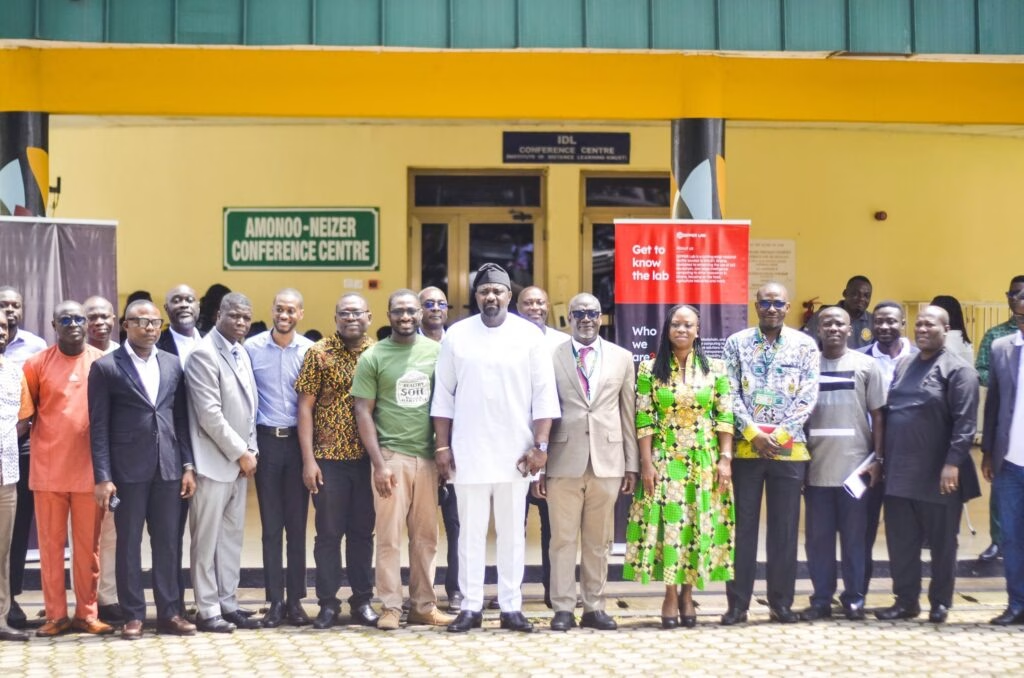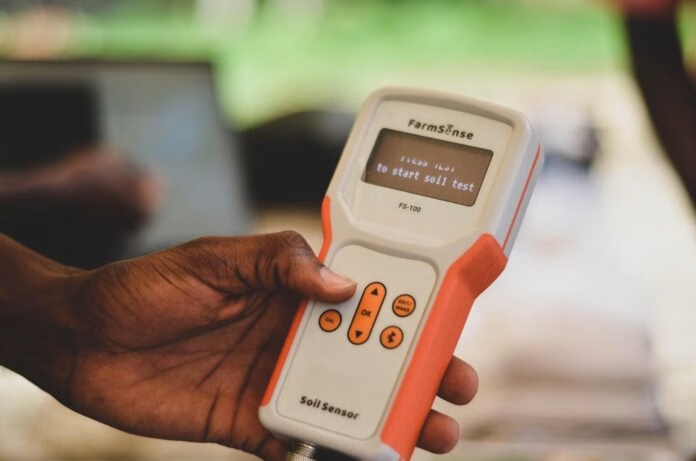
A new AI-driven device, FarmSense, has been developed and launched by local engineers to assist farmers in analyzing soil conditions before planting. The innovation aims to address persistent low yields caused by poor farming practices and a lack of detailed soil information.
FarmSense uses advanced sensing technology to provide real-time data on critical soil factors such as acidity levels, nutrient composition, moisture content, and more. This information allows farmers to make informed decisions about fertilizer use and soil management, leading to improved productivity.
According to research, Ghana’s soil fertility is rapidly declining, largely due to improper use of fertilizers—either excessive or insufficient. A study by the Soil Research Institute of CSIR shows that most soils, particularly in the Ashanti Region, are acidic, making farming less productive.
Climate change is further compounding these issues, threatening food security across the country.
Deputy Minister for Food and Agriculture, John Dumelo, stressed the importance of soil testing:
“Some farmers buy fertilizers like NPK or urea without testing their soils to know what’s actually needed. The ministry is working to promote soil testing to guide proper fertilizer use.”
FarmSense integrates hardware, software, and AI to deliver detailed soil analysis, crop recommendations, and nutrient planning. It enables farmers to make data-backed decisions to improve yields and ensure sustainable farming practices.
Isaac Sesi, CEO of Sesi Technologies, described the device as a game-changer:
“Farmers often guess what their soil needs, which leads to poor results. FarmSense gives them accurate, real-time insights to optimize their output.”
He also noted that the device is affordable and accessible, with efforts underway to scale up production and distribution to reach more farmers.
The FarmSense project is a collaboration between Kwame Nkrumah University of Science and Technology (KNUST), DIPPER Lab, and Manchester Metropolitan University, with funding from the Research and Innovation Systems for Africa (RISA) Fund, supported by UK International Development and Impact Investing Ghana.
Prof. Eric Tutu Tchao, Scientific Director at DIPPER Lab, highlighted the importance of local innovation:
“Our innovations are rooted in our culture. These culturally relevant solutions can create real societal impact.”
Prof. Abigail Opoku Mensah, Acting Administrator of the Ghana National Research Fund, reaffirmed the government’s commitment to supporting local innovation:
“The government is focused on funding homegrown research like FarmSense that drives national development and economic transformation.”