
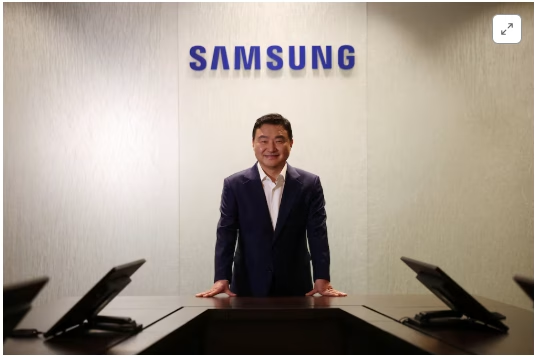
- Samsung plans to expand Galaxy AI features to 800 million devices in 2026, up from 400 million in 2025
- T.M. Roh pledges AI integration across all products, functions, and services
- Collaboration with Google’s Gemini AI positions Samsung ahead in the global AI race, benefiting both companies
Samsung Electronics plans to double the number of its mobile devices with “Galaxy AI” features in 2026, largely powered by Google’s Gemini, according to co-CEO T.M. Roh. The move is aimed at giving the South Korean tech giant an edge in the increasingly competitive global AI race. By the end of last year, Samsung had rolled out Gemini-supported AI across about 400 million devices, including smartphones and tablets, and plans to raise that figure to 800 million this year.
“We will integrate AI across all products, functions, and services as quickly as possible,” Roh told Reuters in his first interview since becoming co-CEO in November.
As the largest backer of Google’s Android platform, Samsung’s plan also benefits Google, which is competing with OpenAI and other firms to attract more users to their AI models. Samsung aims to reclaim its lead from Apple in smartphones and defend its market position against Chinese rivals across phones, TVs, and home appliances. The company will provide integrated AI services across consumer products, strengthening its feature lead over Apple, which remained the top smartphone maker last year according to Counterpoint.
AI Competition and Adoption
Google launched the latest Gemini 3 in November, highlighting strong AI performance across key industry benchmarks. OpenAI responded with an internal “code red,” pausing non-core projects to accelerate development of its GPT-5.2 model.
Roh expects rapid adoption of AI as awareness of the Galaxy AI brand jumped from 30% to 80% in a year. He said, “Even if AI seems uncertain now, within six months to a year, these technologies will become widely used.”
While search remains the most popular AI feature on phones, consumers also use generative AI tools for image editing, productivity, translation, and summaries. Galaxy AI combines Google’s Gemini and Samsung’s own Bixby AI to handle different tasks.
Samsung shares rose 7.5% on Monday, ahead of a Q4 profit report, driven in part by a global memory chip shortage.
Challenges from Memory Chip Shortage
The memory chip shortage benefits Samsung’s semiconductor business but pressures margins in smartphones, its second-largest revenue source. “No company is immune to this impact,” Roh said, adding that the shortage affects TVs, home appliances, and other electronics.
Samsung may raise product prices as a result, though it is working with partners on long-term strategies to mitigate the impact. Market researchers like IDC and Counterpoint predict the global smartphone market may shrink next year due to higher chip costs.
Foldable Phones and Market Outlook
Samsung’s foldable phone segment, launched in 2019, has grown slower than expected due to engineering challenges and limited application support. Roh expects foldables to go mainstream within two to three years, noting a high rate of repeat purchases in this category. Samsung currently controls nearly two-thirds of the foldable market, but faces growing competition from Huawei and Apple, which plans to release its first foldable this year.