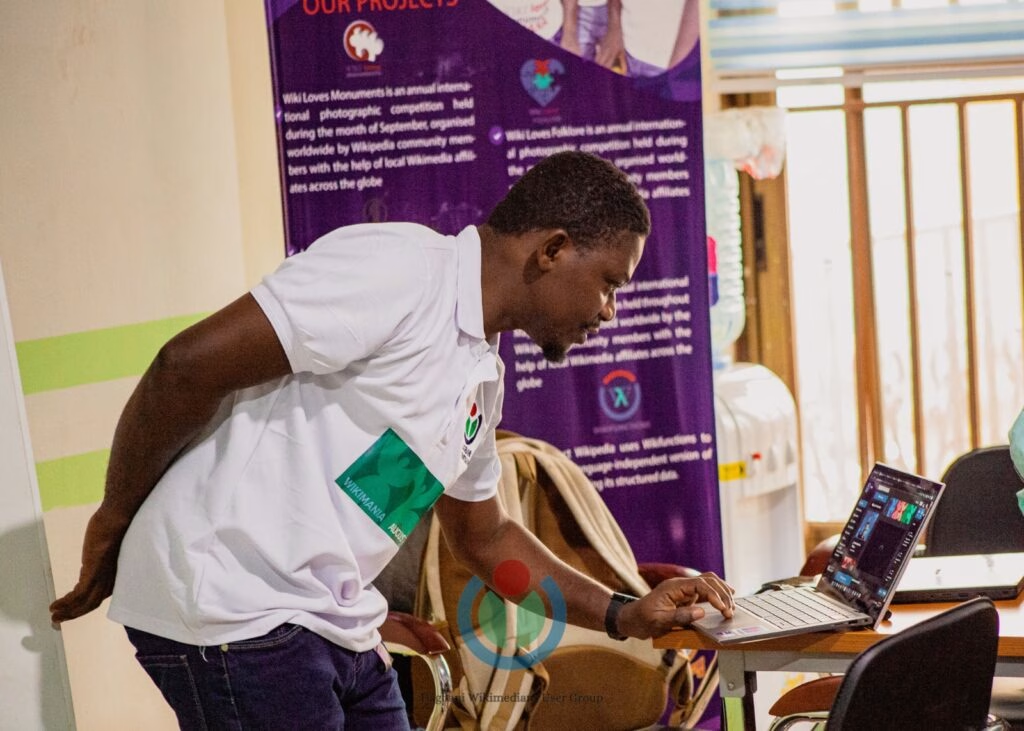
In Northern Ghana, a group of tech-savvy youth is working to digitize local languages for future generations. From Dagbani to Kusaal, Gurene, Dagaare, and Waali, these volunteers are ensuring their languages can be read, learned, and shared online.
Their mission is to preserve culture and identity through digital platforms. It began with the Dagbani Wikimedians User Group, which aimed to make Dagbani visible on Wikipedia.
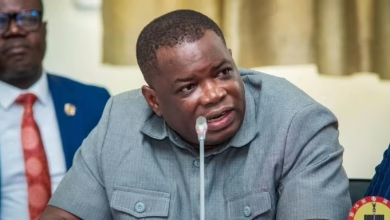
Executive Director Sadick Shahadu said, “We started small, but with a big dream—to make Dagbani accessible online and on Wikipedia. Our goal is to ensure future generations can read, learn, and communicate in Dagbani digitally.”
Language, they believe, is central to identity, and everyone can contribute to its preservation.
Advocacy Officer Rukaya Hamidu emphasized that volunteering doesn’t depend on education, age, or gender. “Anyone committed can join. Seeing your language online instills pride and a sense of belonging,” she said.
Project Coordinator Musah Fuseini highlighted the importance of leveraging the digital space to safeguard languages and culture. He and his colleagues train young people to create and edit Wikipedia articles in local languages, combining digital skills development with heritage preservation.
Grant Manager Mohammed Kamaldeen Fuseini ensures the group has the resources to operate year-round. “My role is to secure grants to support our activities. We are grateful to the Wikimedia Foundation for believing in our mission,” he said.
Social media plays a key role in spreading awareness. Social Media Manager Fuseini Mugisu Suhuyini ensures their work reaches wider audiences, while Abdul-Rafiu Fuseini recruits committed volunteers. “We use Facebook, X, and YouTube to showcase our work and inspire others to join us,” he explained.
The initiative has expanded beyond Dagbani to include Gurene, Kusaal, Dagaare, and Waali. Shahadu noted, “The success of Dagbani inspired other communities to join—a group of communities keeping their ancestors’ voices alive.”
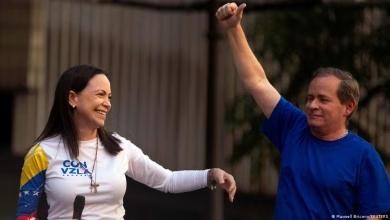
In Bawku, the Kusaal Wikimedians Community (KWC) is creating digital content for Kusaal. Co-lead Engr Mahmud Mohammed-Nurudeen Winna’amzua said, “We want to preserve our language digitally for future generations, not just in Ghana.” Communications Lead Abande Isaac added, “One day, anyone in the world will be able to learn Kusaal online.”
In Bolgatanga and Wa, Daniel Abugri and Zakaria Bukari lead the Gurene and Waali Wikimedians Communities, teaching people to write and edit articles in their languages to ensure they stay alive.
Challenges remain, including slow internet, limited technology, and lack of standardized spellings in some languages, which makes editing difficult. Despite this, university students and volunteers are committed to keeping these languages alive online.
Thanks to these Wikimedians, the voices of their ancestors will continue to be heard for generations to come.