- Every morning, mentally unwell and homeless people sleep on Accra’s bus stop benches and pavements
- What used to be a commuter rest stop has turned into an open-air shelter for the forgotten
- The issue is not just about mental illness — it’s about systemic neglect and social failure
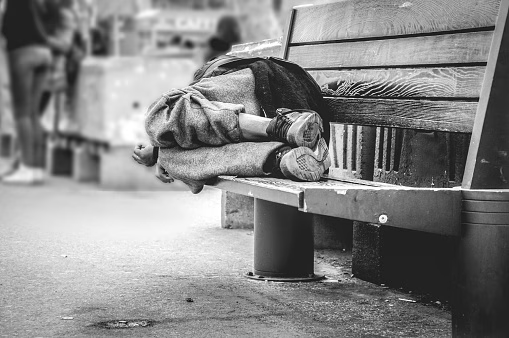
Each morning, as I make my way through the city, I’m met with a scene that has quietly woven itself into Accra’s daily rhythm — men and women, mentally unwell and homeless, sleeping on benches, pavements, and bare concrete at our bus stops.
These are not fleeting images that vanish with the dawn. Even under the harsh light of day, some remain sprawled across benches, lost in sleep, while others wander barefoot through the terminals — unseen, untouched, and, perhaps most painfully, forgotten.
For many of us, the bus stop is a brief pause before another busy day. For them, it is the only home they know. What was once a resting point for commuters has slowly become an open shelter for those battling mental illness. And yet, we have learned to walk past them — eyes forward, hearts closed — as if they are invisible.
A Mirror of Neglect
We often call it “the madman problem,” but I’ve come to see it differently. This is not just about madness — it is about neglect. It reflects how deeply broken our social and mental health systems have become.
When there is no care, no shelter, and no family to turn to, the streets become the only refuge. The bus stop becomes the bed.
The Daily Reality
Beyond sadness lies unease. Commuters whisper about safety. Some of the street dwellers rummage through bins or lash out in confusion. The benches are stained, the air heavy, yet few pause to ask how this became normal.
What Must Change
The answer is not pity — and it is certainly not police crackdowns. What we need is compassion with structure.
Mental health is not a private issue; it is a public one. We need stronger outreach programmes, rehabilitation shelters, and spaces that offer care, not condemnation. Metropolitan assemblies, NGOs, and community leaders must work together to create humane solutions that restore dignity rather than merely clear the streets.
The Hard Truth
The sight of mentally ill people sleeping on benches is not just an urban blemish — it is a mirror of how we treat our most vulnerable citizens.
Until we mend the broken systems that abandon them, Accra’s bus stops will remain silent witnesses to human suffering in plain view.
Each time I pass someone curled on a bench under the scorching sun, I’m reminded of a truth we’ve chosen to ignore: we have normalised something that should never be normal. Deep down, we all know — this is not right.