
- Former President Zuma encourages Ghana and African nations to join BRICS
- Says BRICS can help boost African sovereignty and economic transformation
- Spoke at 2025 UPSA Leadership Lecture on de-dollarization and geopolitics
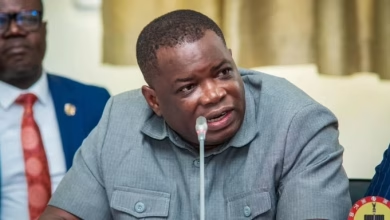
Former South African President Jacob Zuma has called on African countries, including Ghana, to explore joining the BRICS bloc as a strategic step toward accelerating the continent’s development and economic independence.
Speaking at the 2025 UPSA Annual Leadership Lecture on Tuesday, August 19, Zuma emphasized that aligning with BRICS could strengthen African sovereignty through deeper collaboration, resource sharing, and a united push for economic transformation.
“The BRICS agenda is vital in reshaping global power dynamics,” Zuma stated during the lecture, themed: “The Geopolitics and Geo-economics of De-dollarization: BRICS Currency Strategy, Lessons for Africa’s Common Currency, and Beyond.”
He added: “Even powerful institutions like the United Nations have been limited in their influence in this regard. That’s why, in my view, Ghana and other African nations should seriously consider the BRICS pathway.”
BRICS—comprising Brazil, Russia, India, China, and South Africa—accounts for over 40% of the world’s population and around 25% of global GDP. Originally formed to enhance cooperation among major emerging economies, the bloc has established institutions like the New Development Bank to fund infrastructure and development across member states.
In recent years, BRICS has expanded its focus to include de-dollarization initiatives and potential enlargement. Countries such as Saudi Arabia, Iran, and Egypt have expressed interest in joining. While often seen as a counterbalance to Western-led groups like the G7, BRICS also faces internal challenges due to differing national interests.
Zuma’s remarks highlight growing interest in alternative global alliances as Africa seeks to reposition itself in the evolving geopolitical landscape.