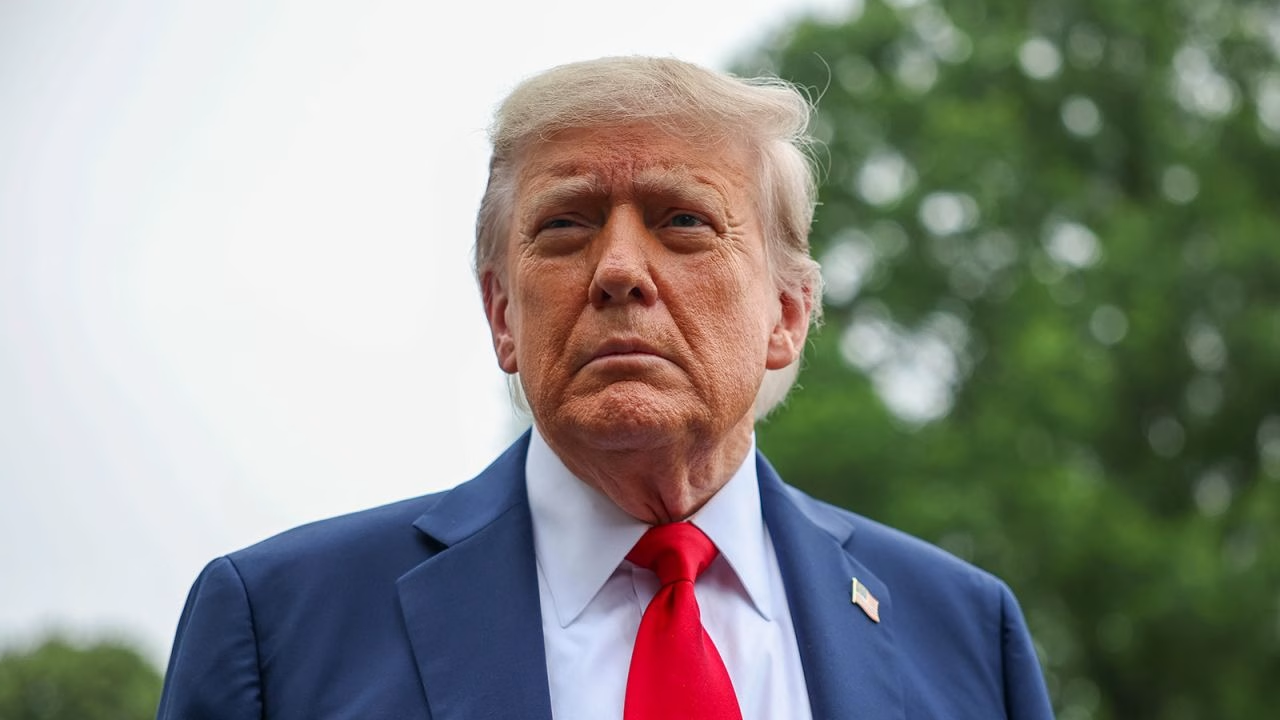
Iran has indicated it is ready to end its military strikes if Israel agrees to cease its own attacks, as momentum builds around the possibility of a ceasefire—an idea recently echoed by U.S. President Donald Trump.
President Trump announced that a “complete and total ceasefire” between Iran and Israel could take effect within hours. However, as of now, neither Tehran nor Jerusalem has officially confirmed the agreement.
In a statement from Tehran, Iranian officials declared that their military response would end if Israel showed restraint. “If Israel halts its offensives, Iran will also cease its retaliatory actions,” said a government spokesperson. Israel has not yet publicly responded.
This follows a night of intense airstrikes in Tehran that lasted until 4:00 a.m. local time—marking the deadline set by Iran for Israel to stop its operations.
Earlier, Iran had fired missiles at the U.S.-operated Al Udeid Air Base in Qatar, in response to Saturday’s U.S. attacks on Iranian nuclear sites. President Trump characterized Iran’s retaliation as “very weak,” emphasizing that there were no casualties and thanking Iran for the advance warning.
Qatar confirmed that its air defense systems successfully intercepted all incoming missiles and condemned the attack as a “clear violation” of regional peace and stability.
Tensions have spiked following recent U.S. airstrikes on three Iranian nuclear facilities, including the underground Fordo site. The international community has since voiced growing concern, urging de-escalation to prevent a broader regional conflict.
As uncertainty continues, all eyes are on Tehran and Jerusalem for confirmation on whether the potential ceasefire will be upheld.