
- Ministry of Youth launches national study on opioid abuse among youth
- RNAQ Foundation CEO Richard Quaye calls opioid abuse a "national canker"
- GHS 500,000 pledged to support expanded research covering all 16 regions
As the world observes International Youth Day, Ghana’s Ministry of Youth Development and Empowerment has launched a nationwide research initiative aimed at combating the growing crisis of opioid abuse among young people.
In partnership with the RNAQ Foundation, the Ministry has committed GHS 500,000 to support the project.
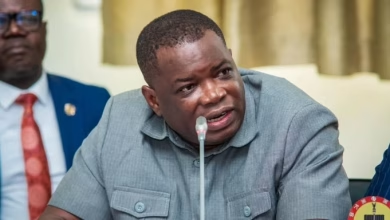
Speaking to JoyNews during the presentation ceremony, Sector Minister George Opare Addo acknowledged the severity of the issue, noting that the root causes of opioid abuse in Ghana remain largely unknown. He announced the commissioning of a comprehensive national study to investigate the drivers of drug abuse and inform future interventions.
“This research alone will cost about GHS 400,000, so the GHS 500,000 will comfortably cover it. With RNAQ’s support, we now have the opportunity to expand the scope. Initially, the research was limited due to funding constraints, but we can now extend coverage to all 16 regions and increase the sample size for more robust findings,” he explained.
Richard Nii Armah Quaye, CEO of the RNAQ Foundation, expressed deep concern about the growing drug abuse problem, describing it as a “national canker.” As a pan-African entrepreneur employing over 4,000 youth, Quaye emphasized his commitment to partnering with the Ministry to confront the crisis.
“I’ve seen firsthand the devastating impact of opioid abuse across Africa, particularly in Sierra Leone. Ghana is heading in the same direction, and we cannot stand by. Our youth are our greatest asset — the backbone of our economy. That’s why we’re contributing GHS 500,000 today to support this vital work,” he said.
The campaign, operating under the banner “Red Means Stop,” aims to raise awareness and drive nationwide action against opioid abuse and related social issues.
With expanded research efforts now covering all 16 regions, authorities are hopeful that the findings will provide a strong foundation for targeted policies and interventions to protect Ghana’s youth and future.