The government has announced that savings from the recent elimination of free fuel allocations for political appointees will be redirected into critical social and development programmes.
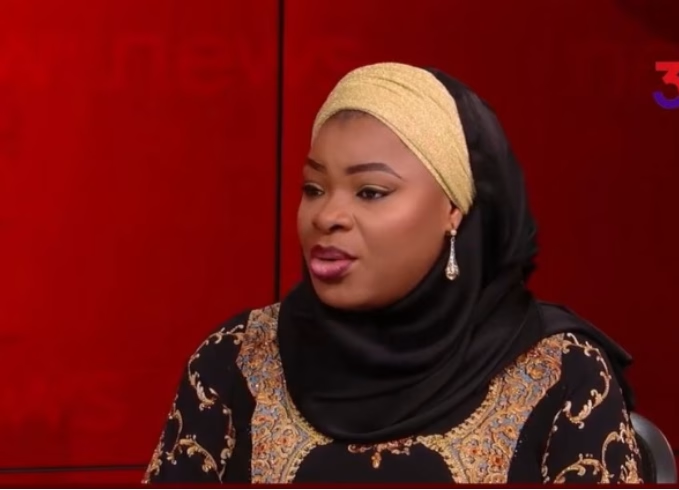
Speaking on JoyFM on Tuesday, July 15, Deputy Presidential Spokesperson Shamima Muslim outlined the administration’s intention to reinvest these savings into priority sectors, in line with President Mahama’s ongoing “reform and reset agenda.”
The new directive ends the practice of providing fuel for the personal and daily use of political appointees, a move aimed at reducing waste and ensuring more efficient use of public resources. Fuel will now only be allocated for clearly defined official duties, under strict regulation. Muslim noted that guidelines outlining eligible official assignments will soon be issued, consistent with the existing Code of Conduct for appointees.
This initiative forms part of a broader cost-saving strategy within the presidency. Muslim also referenced a recent directive regarding government-funded travel, specifying which types of trips will be approved or covered.
Other austerity measures already implemented include the cancellation of DSTV subscriptions for government officials, all intended to eliminate wasteful spending and redirect funds toward development priorities.
The government is currently assessing the financial impact of the fuel directive, with exact savings to be disclosed in the near future. “This is a new policy, so the next step is to calculate the total savings and current fuel expenditures,” Muslim explained.
Targeted Investment Areas
Shamima Muslim identified key sectors that will benefit directly from the reallocated funds and other ongoing fiscal reforms:
- Health Sector: In addition to the Mahama Care Programme, broader investments will be made in health infrastructure and services to improve national healthcare delivery.
- Education Sector: Education remains a high priority, particularly the Ghana School Feeding Programme. Muslim revealed that GH₵600 million has already been released to schools for student feeding since the start of the year, demonstrating the tangible benefits of improved budget management.
- Local Government: A significant portion of the redirected funds will be channelled to local government assemblies. Muslim hinted that the upcoming mid-year budget review on July 24 will provide more detail, including confirmation that 80% of certain allocations have been earmarked for local governments. This supports the government’s decentralisation agenda and aims to empower local authorities to drive grassroots development.
Muslim emphasized that all expenditures will be subject to accountability and transparency under the Public Financial Management Act. Legal mechanisms such as the Electronic Monitoring and Reporting (EMR) system will help track how funds are spent.
She stressed that this fuel policy is designed to be a long-term measure, reflecting the government’s sustained commitment to fiscal responsibility.
This reform aligns with wider economic recovery efforts, including the cedi’s recent strengthening, $5 billion in Gold Board inflows since January, and progress under the IMF programme aimed at restoring macroeconomic stability and reducing debt.
Further details on the financial implications of these reforms and the specific sectoral allocations will be shared during the Finance Minister’s mid-year budget review on July 24, ensuring greater transparency and accountability in the government’s development agenda.