- Prof. H. Kwasi Prempeh urges Ghana to adopt innovative anti-corruption measures
- Ace Ankomah proposes merging OSP, EOCO, and AG’s prosecution unit into a National Prosecutions Authority
- Experts warn current structures limit effective prosecution due to political interference
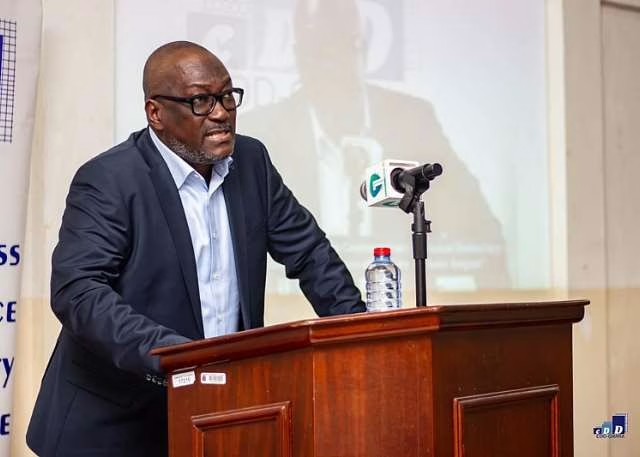
Professor H. Kwasi Prempeh, Executive Director of the Ghana Center for Democratic Development (CDD-Ghana), has joined the growing calls for comprehensive reforms to Ghana’s anti-corruption framework, cautioning that without innovation, key institutions risk becoming ineffective.
His comments come amid a national debate on the future of the Office of the Special Prosecutor (OSP). Private lawyer Ace Ankomah has proposed major structural changes to enhance the independence and effectiveness of criminal prosecutions in Ghana.
Ankomah argued that the creation of the OSP itself reflects the limitations of the Attorney-General’s Office in handling corruption and economic crime cases. He highlighted issues such as political interference and the frequent use of nolle prosequi by successive governments to halt cases. To address these challenges, he suggested merging the OSP, the Economic and Organised Crime Office (EOCO), and the criminal prosecution unit of the Attorney-General’s Office into a single, independent National Prosecutions Authority.
He further proposed that such an authority should enjoy judicial-level independence, secure tenure, and financial autonomy to protect it from political influence.
Speaking on Channel One TV’s The Point of View on Monday, December 8, Prof. Prempeh emphasized that Ghana must adopt internationally recognised tools—such as lifestyle audits and unexplained wealth laws—if the country is to combat corruption effectively.
He noted that while these measures may be unfamiliar locally, they are standard practice in many mature democracies.
“This office [OSP] is new. We are not used to it… There are many approaches to fighting corruption that we are resistant to, including lifestyle audits and unexplained wealth laws. This is the global trend,” he said. “Given evolving technologies, there is no other way to fight corruption effectively.”
Prof. Prempeh argued that Ghana needs to embrace more innovative strategies and move beyond the traditional notion that prosecution is solely the Attorney-General’s responsibility. He highlighted that the country’s entrenched constitutional and institutional arrangements make reform essential.
“If we continue to rely solely on the AG, as constitutionally mandated, we cannot effectively fight corruption. We must innovate around this problem,” he said.
He added that Ghana may now require a constitutional solution to resolve ongoing tensions surrounding anti-corruption prosecutions. Without such reform, he warned, “we will start litigating around it. The office will disappear.”