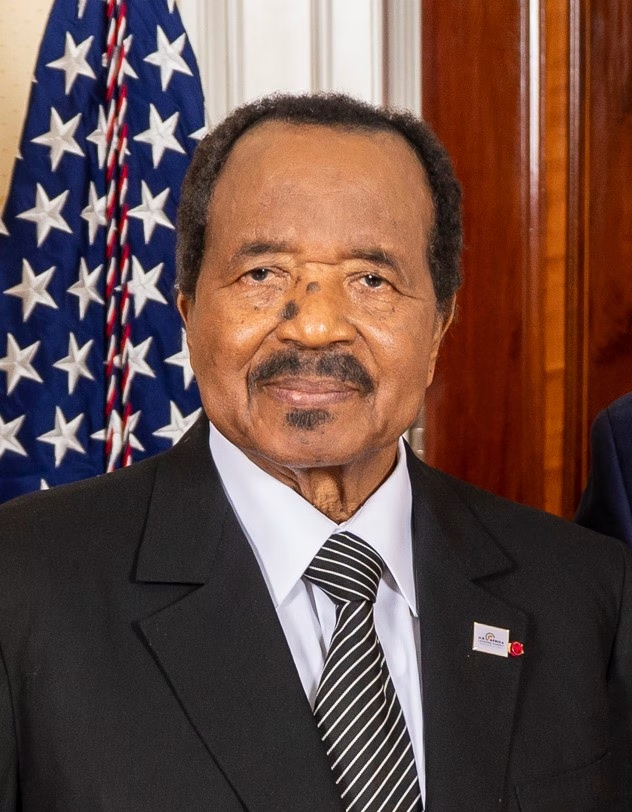
Cameroon’s 92-year-old President Paul Biya announced on Sunday that he will seek an eighth term in the country’s October elections, ending speculation that he might step down due to age and health concerns.
Biya, Africa’s second-longest-serving leader after Equatorial Guinea’s Teodoro Obiang, has ruled since 1982. Despite frequent illnesses and extended stays abroad, he reaffirmed his commitment to remain in power, declaring on social media, “Rest assured that my determination to serve you is commensurate with the serious challenges facing us.”
His announcement marks a pivotal moment in Cameroon’s political landscape, where demands for democratic reform have grown louder. “Cameroon needs renewal, not repetition,” said human rights lawyer Nkongho Felix Agbor. “After over 40 years in power, Cameroonians deserve democratic change and accountable leadership.”
Biya’s tenure has been marked by accusations of corruption, persistent unrest in the English-speaking regions, and conflict with Boko Haram militants spilling in from neighboring Nigeria. His government’s handling of a separatist crisis in the Anglophone regions has led to school closures, civilian displacement, and violent confrontations with security forces.
The political field is shifting, as several former Biya allies have recently broken ranks to announce their own presidential bids. In the 2018 election, Biya won with over 70% of the vote, though the process was criticized for irregularities and low voter turnout amid security threats.
Biya’s reelection bid adds to a broader trend across Africa, where long-serving leaders face growing criticism for clinging to power. In Uganda, for example, President Yoweri Museveni is seeking a seventh term, bringing him closer to half a century in office.