A new Ride-Hailing Safety Index Report, commissioned by Bolt and conducted by leading research firm Ipsos, reveals that 81% of Ghanaians consider ride-hailing safer than other transport options.
The findings reflect increasing public trust in app-based mobility and its contribution to safer, more convenient urban travel.
Based on surveys carried out in Accra, Kumasi, Tamale, and Takoradi, the report examines how safety perceptions influence transport choices, the role of technology in building trust, and how ride-hailing services are helping to enhance safety in Ghana’s cities.
The results were presented at a press briefing hosted by Bolt, which brought together government officials, road safety experts, and key mobility stakeholders to discuss insights from the study and Bolt’s ongoing efforts to drive safety innovation and collaboration within the transport ecosystem.
According to the report, convenience (80%) and safety (45%) are the main reasons Ghanaians choose ride-hailing, underscoring its growing role in everyday mobility.
Nearly all respondents (92%) said they use ride-hailing when they need a safer or more reliable travel option—particularly for late-night trips (70%), when walking feels unsafe (50%), or when they are tired or unwell (46%).
The study also found that women account for 70% of ride-hailing users in Ghana, with the largest group aged 25 to 34 years, emphasizing how digital mobility enables safer, more flexible, and independent travel for young urban commuters.
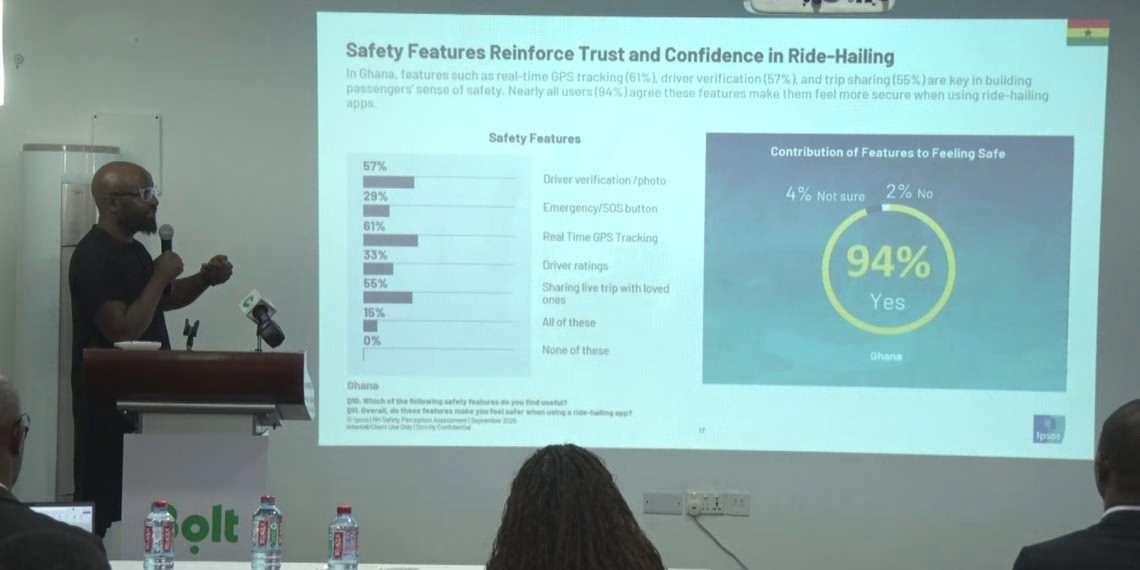
Safety-enhancing features such as real-time GPS tracking (61%), driver verification (57%), and trip sharing (55%) were identified as the most valued tools for building passenger confidence. Overall, 94% of riders agreed that these in-app features make them feel more secure when using ride-hailing services.
Importantly, 52% of respondents believe ride-hailing apps help reduce drunk driving by offering safe, accessible alternatives after social events—contributing positively to public safety.
“This report provides valuable insights into how Ghanaians experience and perceive safety when using ride-hailing,” said Sandra Suzanne Buyole, Regional PR Manager at Bolt Ghana. “It highlights that safety is not only a key reason people choose digital mobility but also an area where continued investment in technology, driver training, and stakeholder collaboration can make a lasting impact.”
Adding to this, Witness Soyinka, Ipsos Head of Strategy, Africa, noted:
“The findings show that Ghanaians increasingly associate ride-hailing with reliability, traceability, and accountability—qualities essential for building long-term trust in mobility services. Safety features that enhance visibility and control are the main drivers of confidence, especially among women and younger users.”
The Ride-Hailing Safety Index Report offers a data-driven foundation to guide future innovations in safety and awareness. It will support ongoing partnerships with regulators and the wider transport community to advance safer, more reliable urban mobility across Ghana.