- Unrest in LA follows immigration raids; National Guard deployed without Governor's request
- Protesters block freeways, set multiple autonomous vehicles on fire
- Over 100 immigrants arrested in LA area; more detained during protests
Violent clashes broke out between demonstrators and law enforcement outside a Los Angeles detention center on Sunday, as National Guard troops deployed by President Donald Trump fanned out across the city following days of unrest over immigration raids. Trump, pledging “very strong law and order,” hinted at a broader military presence to come.
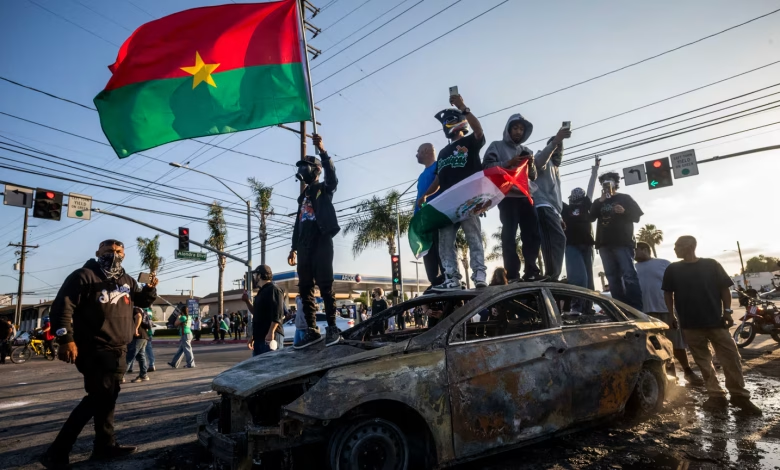
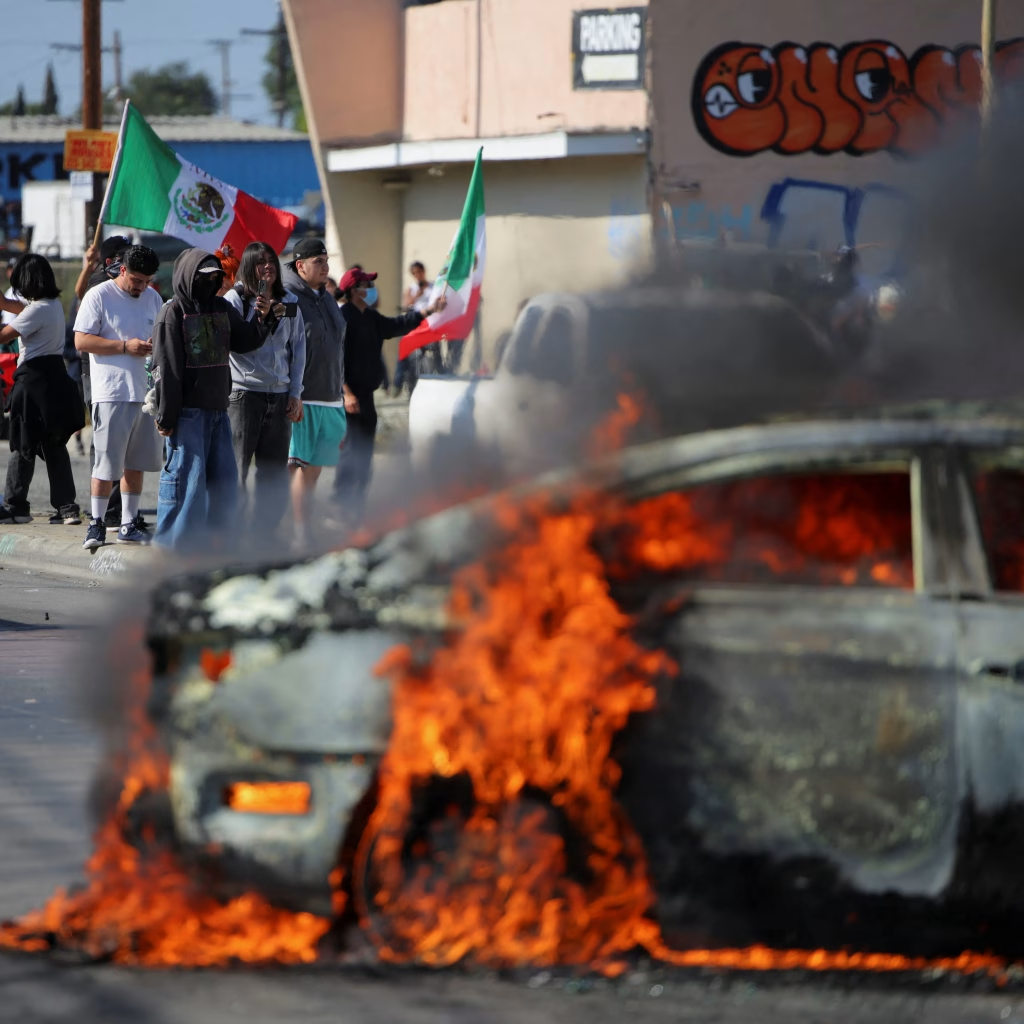
Tensions escalated as thousands of protesters flooded downtown streets, blocking a major freeway and torching several self-driving vehicles. Police responded with tear gas, rubber bullets, and flash-bang grenades. Officers on horseback and in riot gear guarded federal buildings, including a detention center where immigrants had recently been taken.
By evening, police declared the protest an unlawful assembly. While many demonstrators dispersed, others fortified their position using park furniture and hurled objects at officers. This marked the third consecutive day of protests in response to Trump’s immigration crackdown. The arrival of approximately 300 federal troops triggered widespread alarm and resistance.
Outside the Metropolitan Detention Center, protesters chanted “shame” and “go home” at National Guard troops, who stood armed and shielded. When demonstrators advanced too close, law enforcement fired smoke canisters and crowd-control munitions. Protesters later moved to block the 101 Freeway before state patrol officers cleared the scene. Southbound lanes remained shut well into the evening.
As dusk fell, explosions from flash-bangs echoed through downtown while protesters clashed with officers. At least four Waymo self-driving cars were set ablaze, sending thick black smoke into the sky. Police expanded the unlawful assembly order, locking down several city blocks.
Meanwhile, in San Francisco, police arrested around 60 individuals, including minors, following similar demonstrations. Authorities there also declared the gathering unlawful.
California Governor Gavin Newsom, a Democrat, condemned the federal troop deployment as a “serious breach of state sovereignty” in a letter to Trump on Sunday. While meeting with local officials in L.A., it was unclear whether he had spoken with the president since Friday. The deployment marked one of the rare instances in modern U.S. history where a president activated a state’s National Guard without the governor’s consent.
Los Angeles Mayor Karen Bass echoed Newsom’s criticism. “What we’re seeing is chaos provoked by the administration,” she said at a press conference. “This isn’t about public safety—it’s about another agenda.”
The White House dismissed their concerns. Spokesperson Abigail Jackson stated, “It’s a bald-faced lie for Newsom to claim there was no problem in Los Angeles before President Trump got involved.”
China’s consulate in Los Angeles issued a warning to its citizens in the area, advising them to enhance personal safety, avoid large gatherings, and monitor official updates amid the unrest.
The protests erupted Friday in downtown Los Angeles and spread Saturday to the largely Latino communities of Paramount and Compton. Federal agents conducted immigration raids at locations including the Fashion District and a Home Depot parking lot. Rumors of additional raids in Paramount drew more protests, although officials later denied any enforcement activity at one key site.
Protesters attempted to block Border Patrol vehicles with rocks and debris. Agents in riot gear responded with tear gas, pepper balls, and flash-bangs. Over 100 people were arrested over the week due to immigration enforcement, with additional arrests made during the protests, including a union leader accused of obstructing police operations.
Although significant, the protests did not reach the scale of past events that triggered National Guard intervention in Los Angeles, such as the Watts riots, the Rodney King unrest, or the 2020 Black Lives Matter protests—when federal support was requested by the state.
This is the first known instance since 1965 of the National Guard being deployed without a governor’s request. Trump cited a legal authority that allows federal troops to be used when a rebellion threatens the U.S. government. He authorized 2,000 troops to be deployed.
Speaking from Morristown, New Jersey, before boarding Air Force One, Trump said, “There are violent people in Los Angeles, and they’re not going to get away with it.” Asked if troops would remain in L.A., he said, “We’re going to have troops everywhere. We’re not going to let this happen to our country.”
Former Vice President Kamala Harris, a Los Angeles resident, criticized the raids and troop deployment as part of a “cruel, calculated agenda to spread panic and division.” She voiced support for those protesting “to defend our most fundamental rights and freedoms.”