- No new petroleum agreements signed in Ghana since 2019
- Oil production fell from 71.44M barrels (2019) to 48.25M (2024)
- Stakeholders urge government to address internal issues before seeking investors
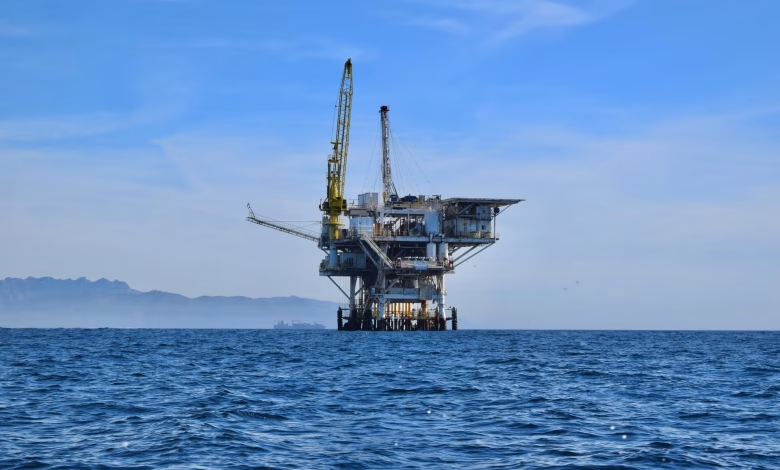
Stakeholders in Ghana’s extractive sector are voicing serious concerns about the country’s waning attractiveness to investors in the upstream petroleum industry. Their worries stem from the fact that no new petroleum agreements have been signed in the past five years, up to 2024.
During the same period, crude oil production has steadily declined—from a high of 71.44 million barrels in 2019 to just 48.25 million barrels in 2024.
Dr. Steve Manteaw, Co-chair of the Ghana Extractive Industries Transparency Initiative (GHEITI), links the decline in investor interest to a mix of regulatory, operational, and market challenges that require urgent policy reforms.
“Ghana is not seen as an attractive investment destination, which is why no new contracts have been signed,” Dr. Manteaw stated at the launch of the 2024 Annual Report by the Public Interest and Accountability Committee (PIAC). He pointed to issues such as frequent arbitration cases with international oil companies (IOCs), an uncompetitive fiscal regime, and ineffective promotional efforts abroad.
He criticized the government’s failure to act on investor feedback, citing ExxonMobil’s exit from Ghana over small block sizes and poor data quality. “We spend money on global roadshows, but without fixing the root problems at home, investors won’t come,” he said. He noted that while ENI made discoveries in both Ghana and Côte d’Ivoire, they chose to produce in the latter due to more favorable conditions.