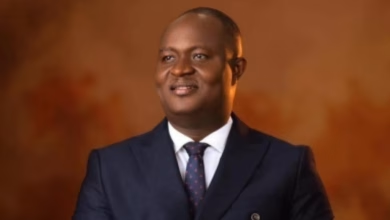
Private legal practitioner Justice Abdulai has called for investment in Ghana’s existing court system, arguing that strengthening courts and judicial personnel should take priority over creating new tribunals for economic crimes and corruption cases.
Speaking on the July 18 edition of KeyPoints, Abdulai said the main constraints facing justice delivery were shortages of court infrastructure, judges, staff and logistics. He said resources proposed for new institutions could instead be directed towards improving the courts already in operation.
“Why not use the same resources to strengthen what we already have?” he asked, according to 3News.
Abdulai said the expansion of the judiciary over the years had not kept pace with the number of cases being brought before the courts. He claimed that more than 50 courts did not have resident judges and depended on judges travelling from other locations to hear matters.
He also pointed to accommodation difficulties for some judges and a heavy backlog in parts of the court system. Abdulai said he could identify more than 10 courts with over 500 pending cases each, describing such caseloads as difficult to manage.
Concerns over delays
In discussing the duration of court cases, Abdulai said concluding a matter within two years could be considered relatively quick under current conditions. He cited an example of a case that had lasted 32 years and which, he said, he later inherited after having studied it during law school.
His comments came during debate over proposed regional tribunals. Abdulai maintained that Ghana already had legal structures that could deal with specialised matters if they were adequately resourced.
He proposed expanded circuit courts assigned specifically to corruption-related cases as an alternative. In his view, dedicated courts within the existing judicial framework would require fewer resources than setting up separate tribunals.
Abdulai acknowledged that public tribunals are recognised under Ghana’s Constitution, but said their history continued to shape public perceptions. He argued that changes in their name or structure would not by themselves remove those perceptions.
He said the focus should remain on addressing the underlying capacity problems affecting the justice system, including facilities, staffing and the pace at which cases are heard.