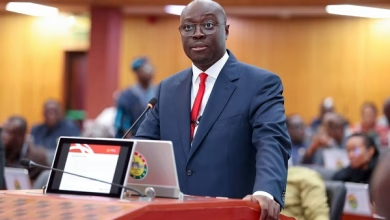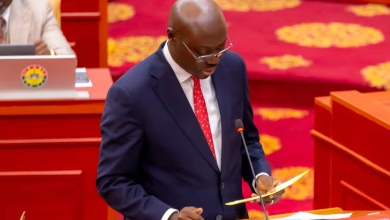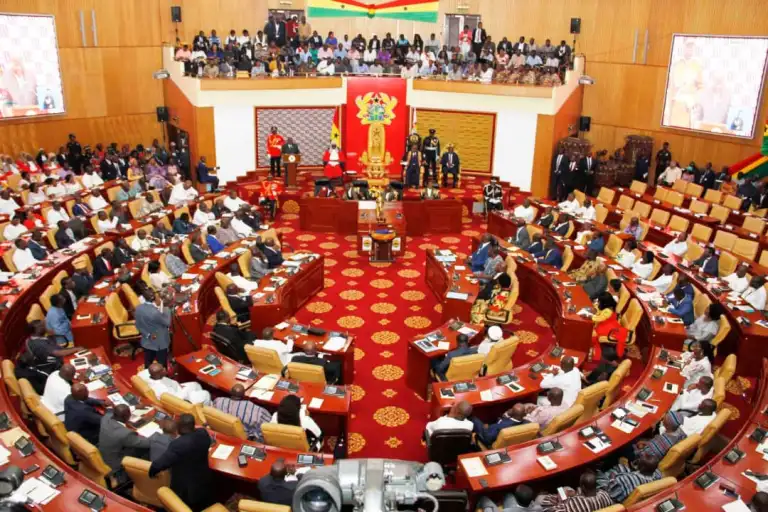
Parliament has given its approval to a US$250 million loan from the World Bank to bolster the country’s Energy Sector Recovery Program (ESRP).
The loan will be used to address long-standing issues within the energy sector, including inefficiencies, operational challenges, and financial instability.
Key interventions funded by the loan include reducing electricity costs through improved distribution, increasing utility revenues, and enhancing the financial management systems of the Electricity Company of Ghana (ECG).
Additionally, the loan will support the implementation of the National LPG Promotion Policy (NLPGPP), aimed at achieving 50% LPG access by 2030.
The World Bank’s International Development Association (IDA) approved the loan after the government’s request for financial assistance.
The loan package was a crucial reason for Parliament’s recall from recess for an emergency session.
The US$250 million loan consists of two parts: US$110 million from the IDA Performance-Based Allocation (PBA) and US$140 million from the IDA Scale-up Window Shorter Maturity Loans (SUW-SML).
The ESRP aims to enforce competitive power procurement, reduce system losses, and enhance the operational, technical, and financial capacity of ECG.
Successful implementation of these reforms is expected to ensure stable, affordable, and competitively-priced electricity, which is vital for driving industrial growth and national development.
During parliamentary deliberations, the Minority raised concerns about a US$90 million consultancy fee embedded in the loan agreement, calling it excessive and demanding further scrutiny.
Despite these objections, the loan was approved with the Majority emphasizing the urgent need to address the country’s critical energy sector issues.
Ghana’s electricity generation mix currently includes thermal power plants and renewable energy sources. Since the 1980s, market reforms have opened the sector to Independent Power Producers (IPPs).
The approved program is divided into two components: the Program for Results (P for R) and Investment Project Financing (IPF), both of which aim to transform the energy sector and position it for long-term sustainability.