- Inflation in Ghana drops to 8%, the lowest in four years, signaling stronger macroeconomic stability
- PwC Ghana’s Vish Ashiagbor notes improved coordination between fiscal and monetary authorities and growing business confidence
- Fiscal discipline and private-sector engagement seen as key to sustaining gains
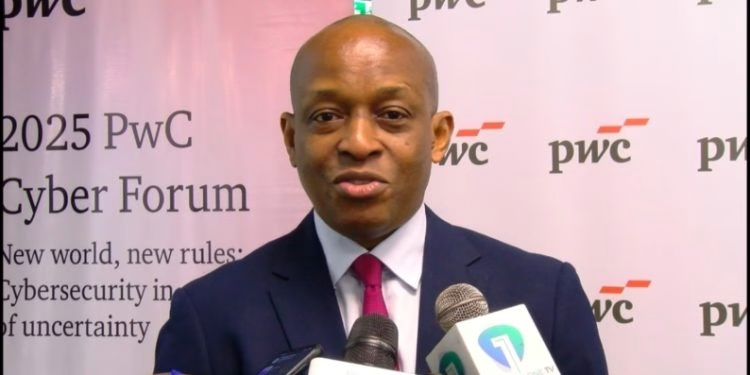
Vish Ashiagbor, Country Senior Partner at PwC Ghana, has described Ghana’s return to 8 percent inflation as a strong signal that the country’s macroeconomic framework is strengthening. He added that this development lays the groundwork for further price stability if current policy momentum continues.
Speaking at the 2025 PwC Cyber Forum in Accra, Mr. Ashiagbor emphasized that the gradual decline in inflation reflects better coordination between fiscal and monetary authorities and growing confidence among businesses and investors.
“The fact that inflation has fallen to 8 percent reflects a stronger macroeconomic framework. If we sustain this momentum and build private sector confidence, we could see a more stable price environment,” he said.
He further noted that fiscal discipline and positive private-sector engagement will be key to consolidating recent gains and anchoring expectations in the months ahead.
Investment advisory firm Merban Capital also welcomed the figure, noting that the current rate—the lowest in four years—signals a return to macroeconomic stability and a rebound in investor sentiment.
Nelson Cudjoe Kuagbedzi, Head of Finance at Merban Capital, described the decline as a milestone confirming the country’s steady economic recovery. He noted that the latest data aligns with the firm’s earlier projections that inflation would return to single digits before year-end.
“We projected inflation to hit single digits this year because the underlying disinflationary triggers were already in place. Prudent fiscal management, a firm monetary stance by the Bank of Ghana, relative currency stability, lower fuel prices, and increased food supply have all contributed to easing price pressures,” Mr. Kuagbedzi told Citi Business News.