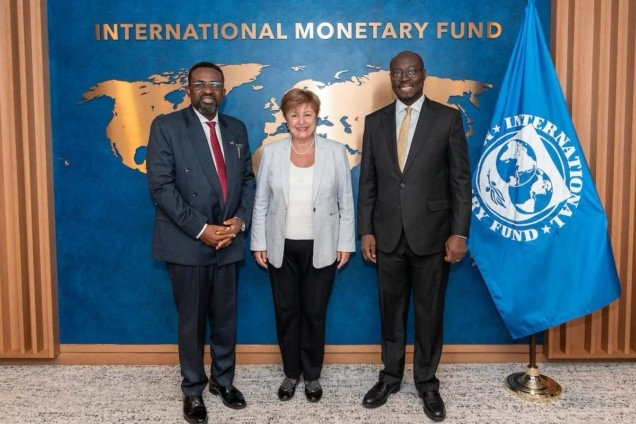
An International Monetary Fund (IMF) staff mission is expected in Accra on September 29, 2025, to conduct Ghana’s fifth programme review under the $3 billion Extended Credit Facility (ECF).
This review comes after the successful completion of the fourth assessment earlier this year, and will evaluate Ghana’s performance against key fiscal and macroeconomic benchmarks. It will also determine the country’s eligibility for the next disbursement of approximately $360 million, scheduled for October.
Since joining the programme in May 2023, Ghana has so far received around $2.3 billion in disbursements. The upcoming review is particularly significant as it is the second-to-last before the programme ends in May 2026.
The mission will assess economic data through June 2025, with discussions expected to center on:
- Inflation trends and the impact of monetary policy
- Reserve accumulation sustainability
- Fiscal performance, including progress toward the 1.5% of GDP primary surplus target
- Arrears in statutory funds such as the NHIL, GETFund, and Road Fund
- Recapitalisation needs of struggling private and state-owned banks, including the National Investment Bank (NIB)
Additionally, the IMF is likely to focus on social spending gaps and how the government balances fiscal consolidation with protecting vulnerable populations.
With the end of IMF oversight approaching, concerns remain about Ghana’s ability to maintain fiscal discipline and economic stability post-programme. While development partners have urged the government to implement “shock absorbers” against potential setbacks, authorities maintain that ongoing reforms and expenditure controls are already reassuring the markets.
Approved in May 2023, the IMF’s SDR 2.242 billion (approx. $3 billion) support package aims to:
- Restore debt sustainability
- Rebuild foreign reserves
- Enhance public financial management
- Support structural reforms
- Create a stable foundation for private-sector-led growth
With only one more review scheduled for April 2026, this fifth assessment will be a key indicator of Ghana’s ability to stay on track and exit the programme with lasting reforms and market confidence intact.