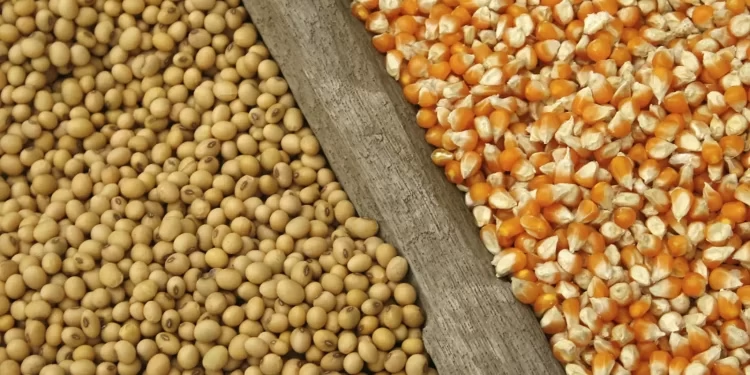
The Government of Ghana has instructed the National Food Buffer Stock Company (NAFCO) to begin purchasing surplus grains from farmers nationwide, in anticipation of a bumper harvest in 2025.
The directive, issued through the Ministry of Food and Agriculture (MoFA), aims to prevent a potential glut on the market caused by expected high yields and leftover stocks from the 2024 harvest.
This marks the first time since NAFCO’s establishment that such a significant financial commitment has been made to support large-scale grain procurement for storage.
MoFA explained that the initiative is intended to:
- Reduce post-harvest losses,
- Ensure stable grain prices,
- And build strategic food reserves to protect against future food shortages and emergencies.
The Ministry assured farmers of government support and urged them to remain calm, emphasizing that NAFCO will be actively purchasing grain to provide a ready market and stabilise prices.
In a public statement, MoFA reiterated its commitment:
“Working with all relevant stakeholders, MoFA is ensuring that every grain produced by Ghanaian farmers finds a sustainable and profitable market.”
This intervention is expected to relieve pressure on farmers, stabilise domestic food supply, and strengthen national food security.
The decision comes amid concerns raised by the Chamber of Agribusiness Ghana (CAG), which warned that the grain sector is facing a crisis, with over 100,000 metric tonnes of unsold maize and rice from 2024 still in storage.
According to CAG, the situation has been worsened by:
- Cheap imports,
- Smuggling of substandard grains,
- And lack of market access, which have pushed farmers into debt, forced them to sell below production cost, and put local processors at risk.
CAG also alleged that illegally smuggled rice and maize are entering the Ghanaian market without paying duties or undergoing quality checks, undercutting local products with artificially low prices. The Chamber blamed the issue in part on collusion between smugglers and corrupt border officials, warning that this trend is eroding farmer incomes, damaging the domestic agricultural value chain, and increasing Ghana’s dependence on imports, thus threatening the country’s food sovereignty.