Ghana and Morocco are advancing efforts to enhance bilateral cooperation in trade, agribusiness, and industrial development, following high-level talks between Ghana’s Ministry of Trade, Agribusiness and Industry and a visiting Moroccan delegation.
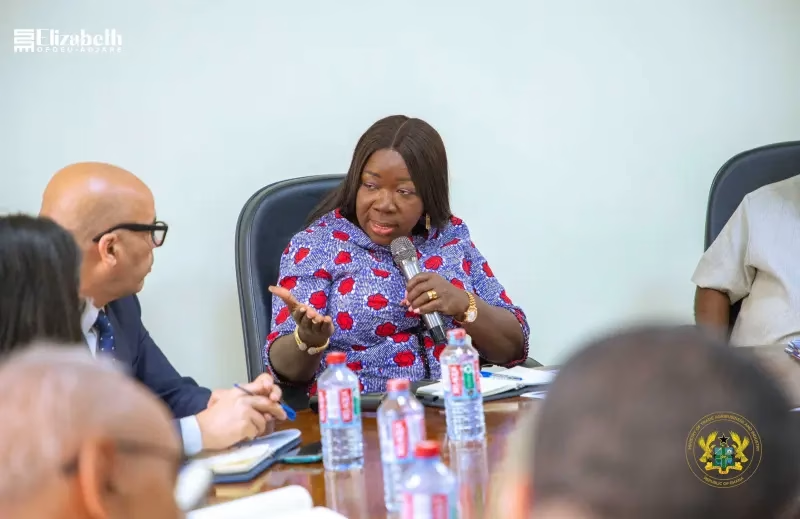
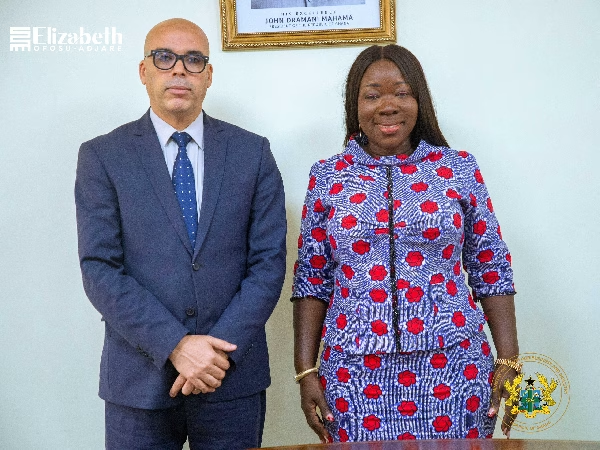
The Moroccan delegation, led by H.E. Abderrahim Cherrab, Deputy Head of Mission at the Moroccan Embassy in Ghana, met with Minister Elizabeth Ofosu-Adjare in Accra on Tuesday to discuss potential partnerships and investment opportunities.
Minister Ofosu-Adjare emphasized Ghana’s conducive investment climate, highlighting tax incentives, low logistics costs, and strong government backing for local manufacturing. She invited Moroccan investors to explore key sectors such as fertilizer production, electric vehicle (EV) assembly, and commercial agriculture.
“Ghana is poised to become West Africa’s manufacturing hub. We welcome Morocco’s strengths in agribusiness and industrial development,” she noted, stressing the country’s commitment to climate-smart agriculture and contract farming models to secure raw materials.
She also proposed harmonizing trade standards and using Ghana as a strategic base for Morocco’s automotive industry expansion in the region.
In response, H.E. Cherrab reaffirmed Morocco’s commitment to supporting Ghana’s food security agenda, announcing an upcoming 2,000-ton fertilizer shipment and the deployment of a diagnostic mission to assess Ghana’s agricultural systems.
He acknowledged shared agricultural challenges—such as low soil fertility, post-harvest losses, and overdependence on primary production—and expressed Morocco’s readiness to share knowledge through South-South cooperation and joint initiatives.
The delegation also included representatives from the Moroccan Agency for International Cooperation, research institutions, and technical universities. Talks included a review of a 2015 Memorandum of Understanding, with plans to revive it to strengthen regulatory alignment and investment collaboration.
Both countries agreed to fast-track the creation of a joint commercial committee and intensify cooperation in trade facilitation, industrial development, and agribusiness growth.
“This visit signals a new era of practical collaboration, especially in food systems and manufacturing,” said H.E. Cherrab.