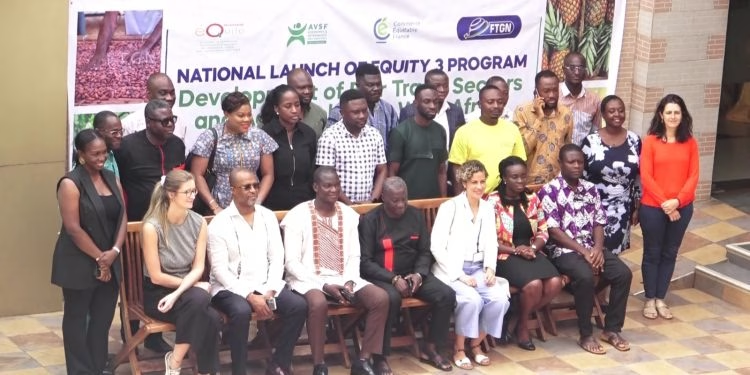
Commerce Équitable France and Agronomists and Veterinarians Without Borders (AVSF), in partnership with the French Development Agency (AFD) and the French Global Environment Facility (FFEM), officially launched Phase III of the Equité Program at the Tomreik Hotel in Accra. This new phase continues their commitment to supporting sustainable, fair trade value chains across West Africa.
Since its inception in 2016, the Equité Program has worked to build strong, economically viable fair trade sectors and foster agroecological innovation in the region. The success of the first two phases—marked by measurable improvements in producer income and cooperative resilience—has paved the way for this expanded effort.
Impressive Impact So Far:
- Cocoa and cashew producers have reported income increases of up to 90%.
- Pineapple producers have seen their earnings triple.
- Cooperatives have introduced agroforestry systems and set up their own bio-input production units, helping to:
- Improve soil fertility
- Triple yields
- Cut disease and pest outbreaks by 15%
- Reduce the use of harmful chemical inputs
- Lower production costs
These achievements highlight how fair trade, combined with agroecological practices, can support rural development and climate resilience.
About Phase III:
With €8 million in funding over four years, the third phase will be rolled out in Ghana, Togo, Benin, and Côte d’Ivoire. It will focus on:
- Scaling up proven agroecological solutions
- Training hundreds of technicians in collaboration with ANADER to support:
- Bio-input manufacturing
- Agroforestry practices
- Improved traceability in cooperatives
Julie Stoll, General Delegate of Commerce Équitable France, emphasized the goal of empowering producer networks and supporting national cooperative platforms like FTGN (Fair Trade Ghana Network), RICE (Ivory Coast), and similar platforms in Togo and Benin.
FTGN President Emmanuel Sarpong reiterated the network’s advocacy for stronger public policies supporting family farming, cooperative systems, and the principles of fair trade.
Gender and Inclusion Focus:
The program will also support the Women’s Leadership School, run by Fairtrade Africa and Max Havelaar France, to promote gender equality and strengthen the role of women in agricultural value chains.
Strong Stakeholder Engagement:
The launch event brought together over 30 organizations, including AVSF, Fairtrade Africa, EcoCare Ghana, SEND Ghana, ActionAid Ghana, GIRSAL, FEDCO, Ghana Cocoa Board, and the Association of Ghana Industries. Participants gained insight into the Fairtrade system, the ARS1000 standard, the activities of FTGN, and innovative practices from previous program phases.
Upcoming Opportunities:
Cooperatives and fair trade groups are encouraged to watch for an upcoming call for proposals to access grant funding under the new phase.