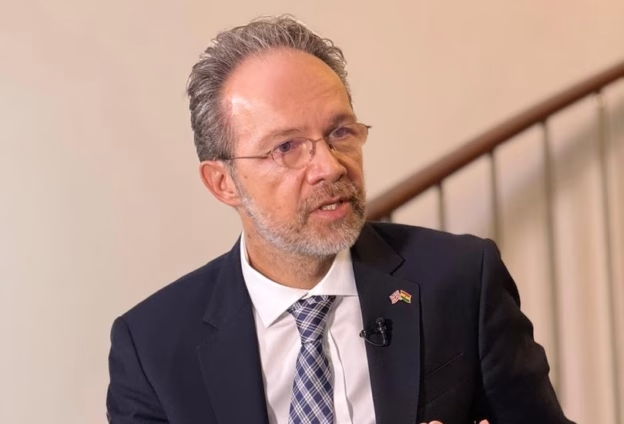
The British High Commissioner to Ghana, Dr. Christian Rogg, has cautioned that democracy is increasingly at risk, especially in West Africa, where countries continue to battle violent extremism and insurgent activity.
His concerns follow claims by a group of military officers in Guinea-Bissau that they had taken control of the government as the nation awaited the results of last Sunday’s presidential election. The officers later appeared on national television announcing the suspension of the voting process.
In reaction, the African Union Election Observation Mission (AUEOM), the ECOWAS Election Observation Mission (EOM), and the West African Elders Forum issued a joint statement condemning the coup attempt after the November 23 presidential and legislative elections. They urged citizens to remain peaceful, reaffirming their commitment to supporting Guinea-Bissau’s democratic journey and stressing the need to safeguard peace, stability, and the well-being of the population during this tense moment.
Speaking on Joy News’ Upfront with Blessed Sogah, Dr. Rogg referenced new Afrobarometer findings indicating a 20-percentage-point drop in public confidence in democracy among Ghanaians—a trend he described as troubling for democratic progress.
Addressing the wider implications of recent coups for Ghana and the region, he noted: “Democracy is under strain globally. Several formerly democratic nations have experienced coups and the rise of authoritarian governance, while even long-established democracies have seen a gradual erosion of rights.”
Though he applauded Ghana’s continued democratic achievements, Dr. Rogg stressed that democracy must be actively sustained to reflect citizens’ aspirations. He highlighted the ongoing constitutional review as an opportunity to evaluate whether Ghana’s democratic structures align with current needs. “Ghana has made remarkable progress, but it is vital not to become complacent and to consider what further improvements can be made,” he said.
Meanwhile, the Economic Community of West African States (ECOWAS) has announced plans to deploy an initial force of 1,650 personnel to combat escalating terrorist threats across the region.
ECOWAS Commission President Dr. Alieu Omar Touray revealed that early-warning systems had detected 450 terrorist incidents and nearly 2,000 deaths in 2025 alone. He cautioned that extremist activity, once concentrated in the Sahel and Lake Chad areas, has now spread throughout West Africa, posing a serious threat to regional security.