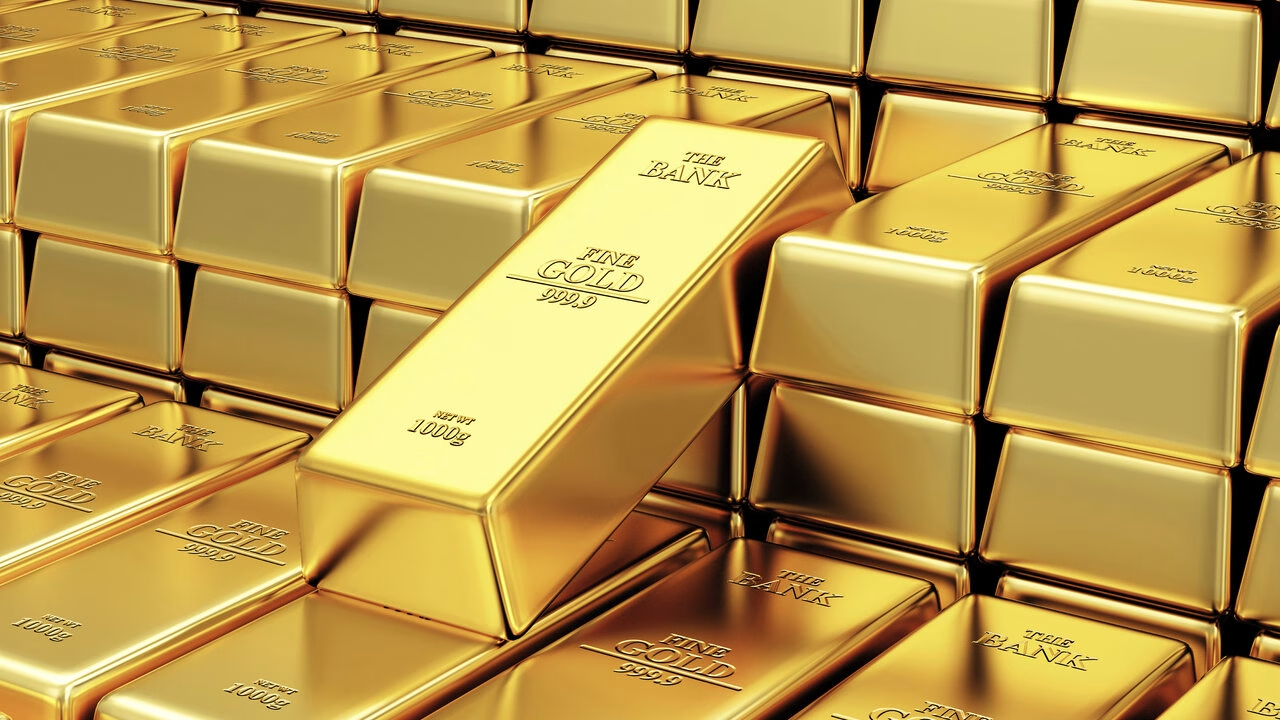
Ghana’s gold industry is enjoying an unprecedented boom.
According to new data from the Bank of Ghana, gold exports hit $8.3 billion in the first half of 2025—nearly double the amount recorded during the same period in 2024 and the highest half-year figure since at least 2016.
Gold remains the backbone of Ghana’s export economy, accounting for 64% of the country’s total exports of $13 billion between January and June.
Favorable global market dynamics have played a key role. Gold prices have stayed high throughout the year, currently trading around $3,290 per ounce. Though slightly below April’s peak of $3,500, prices are still well above the 2024 average of $2,300.
This surge is largely driven by global uncertainty following Donald Trump’s return to the U.S. presidency in January. Investor concerns over unpredictable trade and fiscal policies have led to a flight to safety, boosting demand for gold. Central banks worldwide are also expanding their reserves.
By the end of 2024, gold had overtaken the euro as the second-largest global reserve asset, according to the European Union.
This international demand is benefiting Ghana, the continent’s top gold producer. The country produced 4.8 million ounces of gold in 2024, a 19% increase from 4 million ounces in 2023.
That output earned Ghana $11.6 billion in export revenues last year. If current trends persist, the country could surpass $16 billion in gold exports by the end of 2025.
A structural shift is also underway: small-scale miners are playing an increasingly significant role. In 2023, they accounted for 27% of gold output; by 2024, their share rose to 39%.
The Ghana Gold Board (formerly the Precious Minerals Marketing Company) purchased $5 billion worth of gold from small-scale miners in just the first half of 2025. At an average price of $3,200 per ounce, that equates to around 1.5 million ounces—remarkable considering small-scale miners produced 1.8 million ounces during the entire year of 2024.
This spike raises questions: Has production increased that rapidly? Is formerly smuggled gold now being formally recorded? Or is illicit “galamsey” gold being laundered through official channels? The answer likely involves all three.
Nonetheless, the absence of a robust gold traceability system at the Gold Board makes the sector vulnerable to exploitation.
One milestone stands out: in the first half of 2025, Ghana’s gold exports surpassed its total imports. Gold earned $8.3 billion, while imports stood at $8.2 billion—marking the first time since at least 2016 that gold exports alone have outpaced imports.
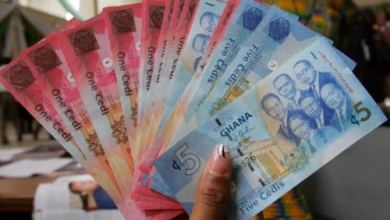
Where the money flows also matters. Since the Gold Board must surrender its foreign currency earnings to the Bank of Ghana, the full $5 billion from small-scale purchases now supports the central bank. This influx of foreign exchange has been a key factor in the cedi’s strength this year.
Still, risks remain. Ghana continues to export unrefined gold, leaving the economy exposed to volatile global prices.
The central bank is reportedly developing a hedging strategy, but more comprehensive action is needed. Chief priorities include establishing a modern gold refinery and enforcing strict traceability throughout the supply chain.
This gold windfall presents a rare opportunity—to stabilize the currency, generate employment, and build long-term economic resilience. But realizing that potential will require a shift from exporting raw ore to adding value locally.
Environmental stewardship and proper regulation must also be central. Economic growth cannot come at the cost of deforestation and polluted waterways.
Ghana is thriving on gold—but the real question is how the country chooses to use the wealth it’s generating.