
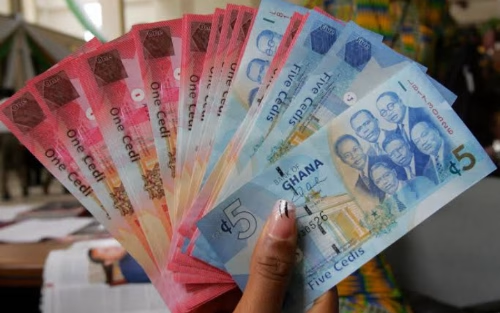
- Ghana's cedi sees mixed performance in the past fortnight
- Cedi weakens 0.91% against the US dollar, but strengthens 1.71% in retail market
- Databank attributes weakness to first-quarter demand from importers
Ghana’s cedi is facing increased seasonal pressure as first-quarter foreign exchange demand begins to impact the currency. Databank Research reports that the local currency showed mixed results over the past two weeks. In the interbank market, the cedi depreciated by 0.91% against the US dollar, closing at GHS 10.98. It also weakened against the pound and euro, dropping 1.31% and 1.08% respectively.
However, in the retail market, the cedi showed resilience against the dollar, appreciating by 1.71% to GHS 11.70, while also recording slight gains against the pound and euro.
Databank attributes the recent depreciation to typical first-quarter trends, as importers increase dollar purchases to replenish inventories. The cedi’s 4% decline in January reflects this seasonal pattern, with continued demand from importers expected to put mild pressure on the currency in the short term.
Despite this, Databank remains confident that Ghana’s external buffers remain supportive. Strong international reserves and high gold prices are expected to provide the Bank of Ghana with the flexibility to intervene and stabilize the currency.
Databank forecasts the USD/GHS exchange rate to fluctuate between GHS 10.95 and GHS 11.10 over the next two weeks.
Meanwhile, in the broader region, Nigeria’s naira strengthened by 5.82%, closing at NGN 1,365.69 per dollar, supported by central bank interventions, improved dollar inflows, and reduced speculative pressures. Analysts predict the naira will trade between NGN 1,350 and NGN 1,370 in the coming week.
The currency outlook for Sub-Saharan Africa remains mixed, driven by varying central bank strategies, reserve positions, and external pressures.
For businesses and investors, the immediate focus is on the strong FX demand from importers and the Bank of Ghana’s ability to manage volatility. While seasonal pressures are expected to persist through the first quarter, healthy reserves and gold earnings should help stabilize the cedi and prevent excessive depreciation.
Companies with foreign currency exposure may need to closely manage liquidity in the coming weeks as the market navigates the typical surge in dollar demand during Q1.