
- BoG sold $1.4B in Q1 2025, surpassing 2023’s annual total
- FX sales driven by energy sector dollar obligations
- FX sales driven by energy sector dollar obligations
The Bank of Ghana sold $1.4 billion in foreign exchange during the first quarter of 2025, according to the latest IMF review of the country’s economic programme.
“The Bank of Ghana’s activity in the FX market has expanded significantly. Interventions continued at a large scale in 2025, reaching $1.4 billion in just the first quarter,” the IMF report stated.
This level of intervention marks a rapid uptick, exceeding the entire $1 billion sold throughout 2023. In 2024, forex sales surged to $3 billion, including $2 billion in the fourth quarter alone, ahead of national elections. The IMF has advised the central bank to reduce its market involvement and adopt greater exchange rate flexibility, along with a formal internal framework to enhance transparency and predictability.
In response to inquiries from JoyNews Research in May 2025, Bank of Ghana officials said the elevated interventions were driven by ongoing dollar-denominated commitments, particularly in the energy sector. These include monthly obligations to independent power producers, fuel suppliers such as the West African Gas Pipeline Company, and importers of refined petroleum products. Fuel imports alone cost an estimated $400 million monthly—about $1.2 billion each quarter.
Despite the high demand, the Bank has been buoyed by strong forex inflows. Rising gold prices, increased local gold purchases, higher remittances, and improved cocoa export earnings have pushed Ghana’s gross international reserves to $10.6 billion—equivalent to 4.7 months of import cover.
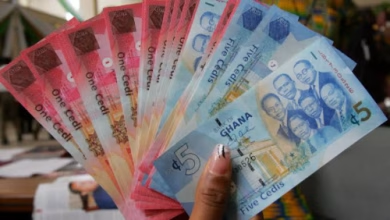
With this cushion, the central bank has maintained support for the cedi, which opened 2025 at GHS 14.70 to the dollar and has since strengthened to GHS 10.37—currently the best-performing currency worldwide.
Analysts attribute this rally to a combination of a weaker U.S. dollar under President Trump’s economic policies, fiscal discipline in Ghana, and booming gold revenues. Still, the Bank of Ghana’s aggressive interventions remain a major factor.
If the current pace continues, total forex sales could reach $5.6 billion by year-end—nearly double 2024’s figure—provided inflows, particularly from gold, remain strong. However, this dependence on commodity-driven inflows is risky. A downturn in gold or cocoa prices could quickly pressure the cedi.
Should reserves fall or global shocks occur, the risk of currency depreciation would rise. While recent fiscal and monetary tightening have been effective, the IMF emphasizes the need for a more structured, rules-based foreign exchange policy to ensure long-term stability.
The cedi’s appreciation is promising, but without clear intervention guidelines and stronger policy discipline, current gains could prove short-lived.