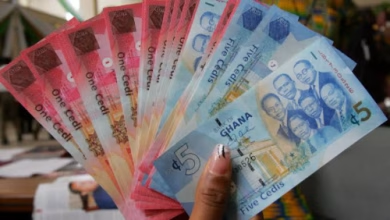
The Bank of Ghana’s reserve assets experienced a substantial increase, rising from US$391.1 million in April 2024 to US$1.1 billion in April 2025, largely driven by the central bank’s gold purchase program.
This growth, along with other factors, has significantly contributed to the appreciation of the Ghana cedi against the US dollar, according to the Bank’s Monetary Policy Report.
The report further revealed that the combined surplus of the current and capital accounts reached US$2.2 billion, positioning Ghana as a net lender to the rest of the world.
Consequently, the financial account recorded a net acquisition of financial assets totaling US$2.1 billion in the first quarter of 2025, a sharp rise compared to the US$357.7 million reported during the same period in 2024.
Regarding other investments, the report highlighted an amount of US$1.4 billion, largely fueled by increased currency holdings and deposits in the nostro accounts of commercial banks.
By the end of April 2025, Ghana’s Gross International Reserves (GIR) stood at US$10.7 billion, representing 4.7 months of import cover. This is an improvement from US$9.0 billion at the close of December 2024, which covered 4.0 months of imports.
Positive Outlook for External Sector
Despite the resumption of external debt repayments following Ghana’s debt restructuring, the Bank of Ghana maintains a positive forecast for the country’s external sector.
The report noted:
“Increased production volumes of Ghana’s key exports, elevated commodity prices, and stronger remittance inflows will bolster the external sector’s performance.”
It also emphasized that sustained adherence to policy reforms under the IMF program will restore investor confidence and encourage greater capital inflows.
Additionally, the operational launch of the Ghana Gold Board (GoldBod) is expected to further support the central bank’s Gold for Reserves initiative, aiding in the accumulation of long-term reserve buffers.