- U.S. government partially shuts down after missed funding deadline
- Senate rejects both Democratic and Republican funding proposals
- President Trump threatens irreversible cuts during shutdown
The U.S. federal government has entered a partial shutdown after lawmakers failed to pass a last-minute spending bill before the deadline at 12:01 a.m. EDT on Wednesday.
Both Democrats and Republicans in the Senate rejected competing stopgap proposals, triggering the first shutdown since 2018. Although shutdowns have occurred more than a dozen times since 1980, this one could bring greater disruption, with President Donald Trump vowing to use it as an opportunity to scale down the public sector.
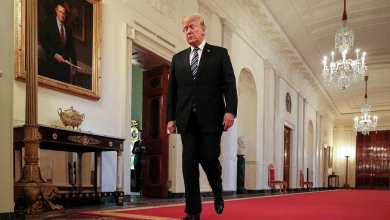
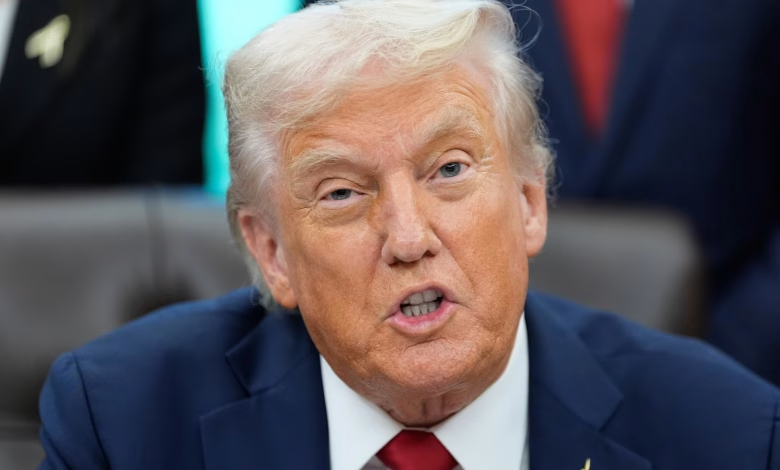
Speaking at the White House on Tuesday, Trump warned he could take irreversible actions during the shutdown, including eliminating government programs favored by Democrats and laying off federal workers.
“We can do things during the shutdown that are bad for them and irreversible by them,” Trump said, suggesting a “lot of good” could come from the shutdown.
🔒 What the Shutdown Means
- Non-essential services such as economic data releases and small business loan processing will pause.
- Essential workers like military personnel, law enforcement, and air traffic controllers will work without pay.
- Social security and food assistance programs will continue.
Trump has threatened to use the shutdown to permanently reduce federal staff, calling many of them “Democrats.”
Richard Painter, former ethics lawyer under President George W. Bush, criticized Trump’s threats as “strong-arm tactics,” adding that much of what he’s proposing is not legally authorized under civil service protections.
🏛️ Political Standoff
The shutdown follows weeks of gridlock between the two parties. Democrats rejected a Republican stopgap bill earlier this month, demanding it include healthcare provisions such as preserving Obamacare subsidies and reversing Medicaid cuts from Trump’s “One Big Beautiful Bill Act.”
Republicans insisted healthcare reforms should be handled separately.
On Tuesday, a GOP stopgap bill to fund the government through November 21 failed in a 55–45 vote—falling short of the 60 votes needed. Three centrist lawmakers, including two Democrats and one Independent, voted with Republicans, while Senator Rand Paul opposed it on libertarian grounds.
Democrats’ alternative bill, which included over $1 trillion in healthcare spending and extended funding until the end of October, also failed 47–53 with no Republican support.
⚔️ Blame Game
As the deadline passed, both sides blamed each other. Democratic Senate Leader Chuck Schumer accused Republicans of choosing a shutdown over fixing healthcare. House Democrat Leader Hakeem Jeffries said Republicans were “hurting everyday Americans.”
The White House, meanwhile, posted the phrase “Democrat Shutdown” online, intensifying partisan tensions.
Republican Senate Majority Leader John Thune expressed hope that Democrats might still support a “clean” GOP bill in an upcoming vote.
“This was all unnecessary. It’s just political theater to appease their far-left base,” Thune said.
📊 Background
This marks the 15th U.S. government shutdown since 1980. The longest one, lasting 34 days, occurred in 2018–2019—also under President Trump.
Economist Gerald Epstein from the University of Massachusetts-Amherst noted that while Trump’s actions are unpredictable, Democrats are unlikely to concede easily.
“We’ll keep fighting for the American people,” Schumer vowed.