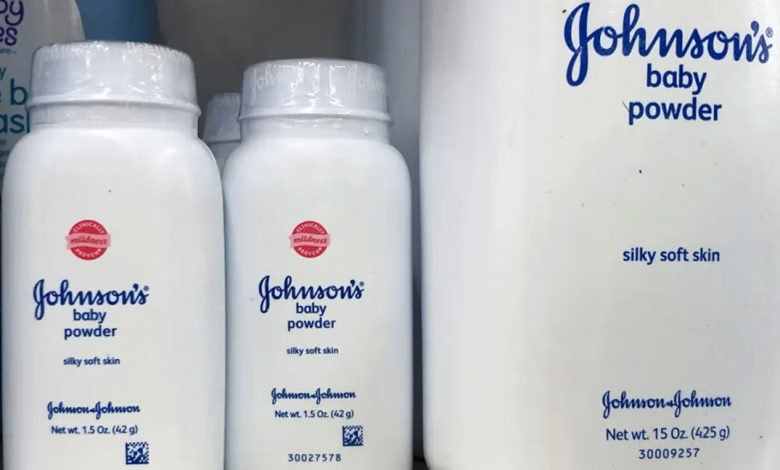
- Over 3,000 people are suing J&J in the UK over alleged asbestos in baby powder
- Internal documents suggest the company knew of contamination risks as early as the 1960s
- The lawsuit claims J&J marketed the product as safe while hiding potential cancer risks
The case, which could become the largest product liability lawsuit in UK history, draws on internal company documents and scientific reports reviewed by the BBC.
Allegations of Decades-Long Cover-Up
According to the lawsuit, J&J knew as far back as the 1960s that its talcum-based baby powder contained potentially hazardous minerals — including tremolite and actinolite — which, in their fibrous form, are classified as asbestos and linked to deadly cancers such as mesothelioma and ovarian cancer.
Court documents claim that instead of warning consumers, J&J launched aggressive marketing campaigns promoting its product as safe, gentle, and pure — particularly targeting new mothers and later African American women.
“They knew it was contaminated and still sold it to new mums and their babies,” said Siobhan Ryan, a 63-year-old woman from Somerset, who has stage 4 ovarian cancer and blames the powder for her illness.
Internal Documents Raise Ethical Questions
The claim references several internal memos, including a 1973 document stating:
“Our baby powder contains talc fragments classifiable as fiber… Occasionally sub-trace quantities of tremolite or actinolite are identifiable.”
In the same year, executives discussed keeping a proposed asbestos-removal patent confidential to avoid public exposure.
“We may wish to keep the whole thing confidential… rather than allow it to be published… and let the whole world know,” one memo allegedly reads.
J&J maintains the documents are taken out of context and were part of regulatory discussions, not proof of wrongdoing.
Marketing Despite Warnings
An internal email from 2008 referenced in the lawsuit allegedly states:
“The reality that talc is unsafe for use on/around babies is disturbing… I don’t think we can continue to call it baby powder and keep it in the baby aisle.”
J&J responded that this remark referred to asphyxiation risks (a known but rare issue with powders), not cancer or asbestos exposure.
Pushback Against Tighter Regulations
The lawsuit also claims J&J lobbied the US FDA in the 1970s to accept less sensitive testing standards that would overlook low levels of asbestos in talc, allowing the company to maintain claims of product purity.
J&J denies any wrongdoing, stating its products met all regulatory standards, did not contain asbestos, and were safe to use.
Human Impact
Many claimants in the UK case have been diagnosed with or died from mesothelioma, ovarian cancer, or other related illnesses. Most are long-term users of J&J’s talc-based powder.
Siobhan Ryan, one of the lead claimants, said she used the powder on herself and her children, believing it was safe.
“It smelt nice and was soft and lovely… I thought I was doing the best for them.”
After being diagnosed with late-stage cancer, Siobhan has undergone multiple treatments and surgeries and continues to fight the disease.
Similar US Lawsuits and Multi-Billion-Dollar Verdicts
The UK lawsuit mirrors extensive litigation in the US, where courts have awarded billions in damages. Earlier this month, a Connecticut jury awarded $25 million to a man diagnosed with terminal peritoneal mesothelioma after lifelong use of J&J baby powder.
The trial revealed testimony from a former J&J toxicology director who admitted to making safety claims without reviewing test results that had identified asbestos.
Company Response and Product Withdrawal
J&J stopped selling talc-based baby powder in the US in 2020 and in the UK in 2023. The company has since transferred its consumer health division to a spinoff entity, Kenvue.
In a statement, Kenvue said:
“We sympathise deeply with people living with cancer… That’s why the facts are so important.”
They reiterated that the product was tested extensively by independent labs, universities, and health authorities and maintained that it “did not contain asbestos and does not cause cancer.”
A major legal action has been launched in the UK against pharmaceutical giant Johnson & Johnson (J&J), with over 3,000 claimants alleging the company knowingly sold baby powder contaminated with asbestos.
The case, which could become the largest product liability lawsuit in UK history, draws on internal company documents and scientific reports reviewed by the BBC.
Allegations of Decades-Long Cover-Up
According to the lawsuit, J&J knew as far back as the 1960s that its talcum-based baby powder contained potentially hazardous minerals — including tremolite and actinolite — which, in their fibrous form, are classified as asbestos and linked to deadly cancers such as mesothelioma and ovarian cancer.
Court documents claim that instead of warning consumers, J&J launched aggressive marketing campaigns promoting its product as safe, gentle, and pure — particularly targeting new mothers and later African American women.
“They knew it was contaminated and still sold it to new mums and their babies,” said Siobhan Ryan, a 63-year-old woman from Somerset, who has stage 4 ovarian cancer and blames the powder for her illness.
Internal Documents Raise Ethical Questions
The claim references several internal memos, including a 1973 document stating:
“Our baby powder contains talc fragments classifiable as fiber… Occasionally sub-trace quantities of tremolite or actinolite are identifiable.”
In the same year, executives discussed keeping a proposed asbestos-removal patent confidential to avoid public exposure.
“We may wish to keep the whole thing confidential… rather than allow it to be published… and let the whole world know,” one memo allegedly reads.
J&J maintains the documents are taken out of context and were part of regulatory discussions, not proof of wrongdoing.
Marketing Despite Warnings
An internal email from 2008 referenced in the lawsuit allegedly states:
“The reality that talc is unsafe for use on/around babies is disturbing… I don’t think we can continue to call it baby powder and keep it in the baby aisle.”
J&J responded that this remark referred to asphyxiation risks (a known but rare issue with powders), not cancer or asbestos exposure.
Pushback Against Tighter Regulations
The lawsuit also claims J&J lobbied the US FDA in the 1970s to accept less sensitive testing standards that would overlook low levels of asbestos in talc, allowing the company to maintain claims of product purity.
J&J denies any wrongdoing, stating its products met all regulatory standards, did not contain asbestos, and were safe to use.
Human Impact
Many claimants in the UK case have been diagnosed with or died from mesothelioma, ovarian cancer, or other related illnesses. Most are long-term users of J&J’s talc-based powder.
Siobhan Ryan, one of the lead claimants, said she used the powder on herself and her children, believing it was safe.
“It smelt nice and was soft and lovely… I thought I was doing the best for them.”
After being diagnosed with late-stage cancer, Siobhan has undergone multiple treatments and surgeries and continues to fight the disease.
Similar US Lawsuits and Multi-Billion-Dollar Verdicts
The UK lawsuit mirrors extensive litigation in the US, where courts have awarded billions in damages. Earlier this month, a Connecticut jury awarded $25 million to a man diagnosed with terminal peritoneal mesothelioma after lifelong use of J&J baby powder.
The trial revealed testimony from a former J&J toxicology director who admitted to making safety claims without reviewing test results that had identified asbestos.
Company Response and Product Withdrawal
J&J stopped selling talc-based baby powder in the US in 2020 and in the UK in 2023. The company has since transferred its consumer health division to a spinoff entity, Kenvue.
In a statement, Kenvue said:
“We sympathise deeply with people living with cancer… That’s why the facts are so important.”
They reiterated that the product was tested extensively by independent labs, universities, and health authorities and maintained that it “did not contain asbestos and does not cause cancer.”