
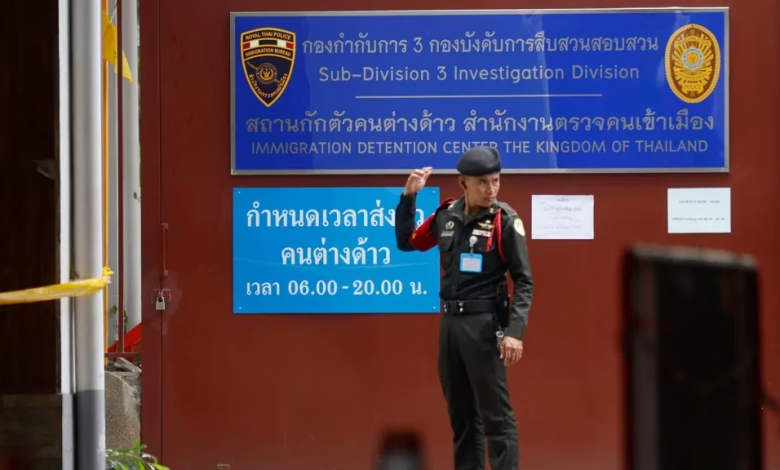
- Thailand deports 40 Uyghurs to China despite human rights concerns
- Group had been held in Thai detention centre for 10 years
- Rights groups warn of torture, imprisonment, and possible death
At least 40 Uyghurs have been deported to China by Thai authorities, despite concerns from rights organizations about the potential risks of torture or even death they face upon return.
The group, believed to have been flown back to China’s Xinjiang region on Thursday, had been held in a Bangkok detention center for a decade. Their deportation marks the first time Thailand has sent Uyghurs back to China since 2015.
China has faced accusations of committing crimes against humanity and potentially genocide against the Uyghur population and other mostly Muslim ethnic groups in Xinjiang, allegations that Beijing firmly denies.
The deportation process was conducted in secrecy following concerns raised by both the United States and the United Nations. Reports from Thai media indicated that several trucks, some with windows covered with black plastic sheets, left Bangkok’s main immigration detention center early Thursday morning. Shortly after, a tracker from Flightrader24 showed an unscheduled China Southern Airlines flight departing from Bangkok, eventually arriving in Xinjiang. The exact number of people deported remains unclear.
The Thai government later explained that it had made the decision to deport the 40 Uyghurs because it was unjust for them to have been held for more than ten years. Authorities added that no third country had agreed to accept the group, including Turkey, which had previously granted asylum to Uyghurs. At present, eight Uyghurs remain in Thailand, including five who are serving prison sentences for crimes committed while in detention.
Prime Minister Paetongtarn Shinawatra reportedly received assurances during a visit to China that the deported Uyghurs would be treated properly upon their return. However, she did not initially confirm the deportations when questioned by reporters on Thursday.
“In any country in the world, actions must adhere to the principles of law, international processes, and human rights,” Shinawatra said in response to questions.
Beijing confirmed the deportation of 40 Chinese nationals but refused to specifically acknowledge that they were Uyghurs. A statement from China’s foreign ministry described the repatriation as being carried out in line with both Chinese and Thai laws, as well as international practices.
Chinese state media further stated that the group had been “bewitched” by criminal organizations and ended up stranded in Thailand after illegally leaving China.
The group of 40 is part of a larger group of over 300 Uyghurs who were detained at the Thai border in 2014 after fleeing the repression in Xinjiang. Many of the original detainees were sent to Turkey, while others were deported back to China in 2015, sparking widespread protests from governments and human rights organizations.
Opposition lawmaker Kannavee Suebsang voiced his disapproval on social media, condemning the Thai government for violating the human rights of the Uyghurs. “There must not be Uyghur deportation to face persecution. They were jailed for 11 years. We violated their human rights for too long,” he said.
The detention center where the Uyghurs had been held was known for its unsanitary and overcrowded conditions, with reports stating that five Uyghurs died while in custody.
Human Rights Watch released a statement on Thursday, warning that the deported group now faces a high risk of torture, enforced disappearance, and long-term imprisonment. Elaine Pearson, the organization’s Asia director, stated, “Thailand’s transfer of Uyghur detainees to China constitutes a blatant violation of Thailand’s obligations under domestic and international laws.”
Phil Robertson, director of the Asia Human Rights and Labour Advocates (AHRLA) group, criticized the deportations, claiming they “totally destroyed” any perception that Thailand’s current government differed from its predecessors in cooperating with authoritarian regimes.
Amnesty International also condemned the deportations, calling them “unimaginably cruel.”
Members of the US House China Committee issued a bipartisan statement on Wednesday, warning that the deportations violated international human rights norms to which Thailand is obligated under international law.
The United Nations expressed its “deep regret” over the deportations.
Xinjiang, officially known as the Xinjiang Uyghur Autonomous Region (XUAR), is home to around 12 million Uyghurs, who are predominantly Muslim. The region has been a focal point of mass migration by China’s Han ethnic majority, allegedly orchestrated by the state to dilute the Uyghur population. Reports suggest that China has also targeted Muslim religious leaders, banned religious practices, and destroyed mosques and tombs in the region.