- 17-year-old Ailsa Ostovitz accused of using AI on three assignments; grade docked despite her denial
- Teacher used AI detection software independently; district warns of tool inaccuracies
- Ostovitz reached out to teacher, but message initially ignored; issue later resolved
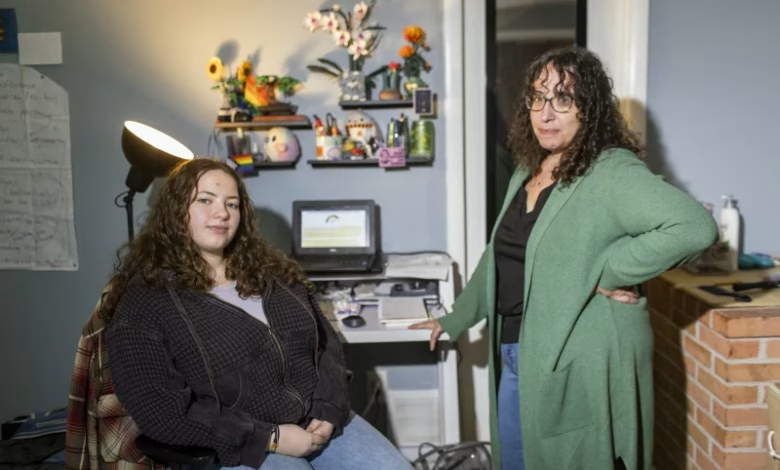
Ailsa Ostovitz, a 17-year-old junior at Eleanor Roosevelt High School in the Maryland suburbs of Washington, D.C., has been accused of using AI on three assignments across two different classes this school year.
“It’s mentally exhausting because I know this is my work,” Ostovitz said. “I know that this is my brain putting words and concepts onto paper for other people to understand.”
Ostovitz shared with NPR one of the accusations from a teacher in September, which included a screenshot from an AI detection program indicating a 30.76% probability that she had used AI on a writing assignment describing the music she enjoys.
“I write about music. I love music. Why would I use AI to write about something I’m passionate about?” she asked.
After receiving the accusation, Ostovitz reached out to her teacher through the school’s online learning platform, asking if a different AI detector could be used. The teacher did not respond and docked her grade.
Ostovitz’s mother, Stephanie Rizk, described her daughter as a high-achieving student who cares deeply about her schoolwork. She expressed concern that the teacher made assumptions about Ailsa’s work so early in the academic year.
“Get to know their level of skill first, and then maybe your AI detector is useful,” Rizk said. She added that when she met with the teacher in mid-November, the teacher claimed to have never seen Ailsa’s message.
Prince George’s County Public Schools (PGCPS) clarified in a statement that the teacher had independently used an AI detection tool, which the district does not provide or pay for.
“During staff training, we advise educators not to rely on such tools, as multiple sources have documented their potential inaccuracies and inconsistencies,” the statement said.
PGCPS declined to make the teacher available for an interview. Rizk noted that after their meeting, the teacher no longer believed Ailsa had used AI.
Experts say Ostovitz’s experience is not uncommon. A nationally representative poll by the Center for Democracy and Technology found that more than 40% of 6th- to 12th-grade teachers used AI detection tools last school year, despite research showing these tools are often unreliable.
“It’s now fairly well established in the academic integrity field that these tools are not fit for purpose,” said Mike Perkins, a leading researcher on academic integrity and AI at British University Vietnam.