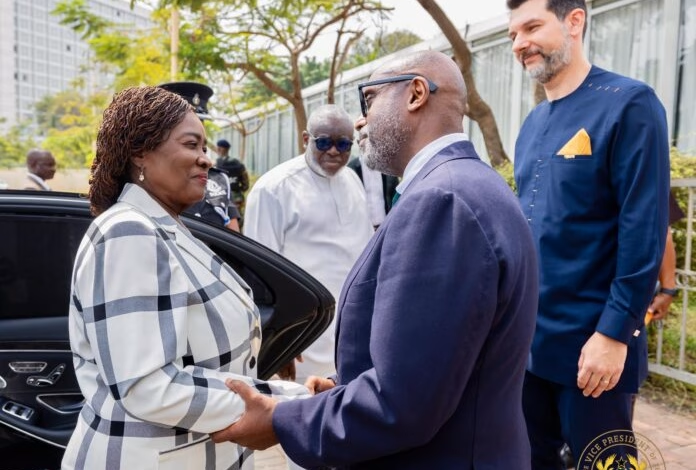
- Vice President Prof. Naana Jane Opoku-Agyemang met IMF country and regional heads on January 19
- Discussions focused on Ghana’s economic recovery amid global debt and financing concerns
- Ghana has achieved single-digit inflation, improved currency stability, and stronger GDP growth
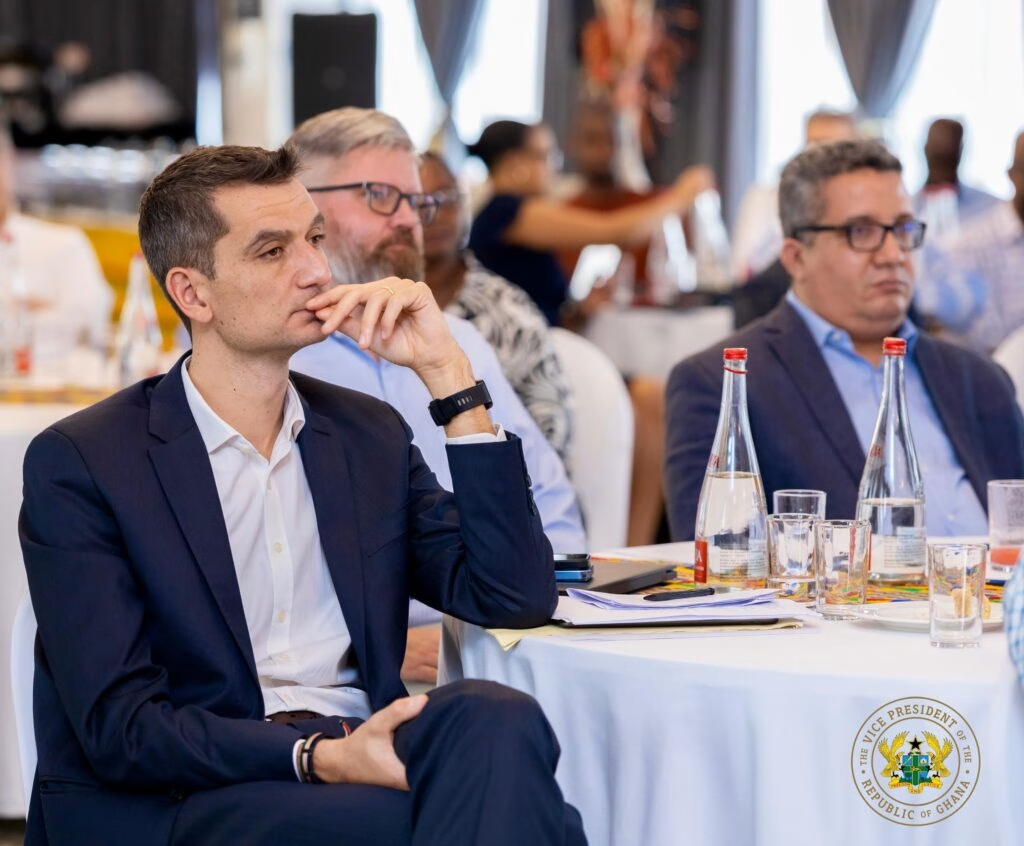
Vice President Professor Naana Jane Opoku-Agyemang has held discussions with Heads of International Monetary Fund (IMF) country and regional offices in Africa, using the engagement to reflect on Ghana’s economic journey amid growing global concerns about debt sustainability and development financing.
The meeting, which took place on January 19, offered the Vice President an opportunity to highlight Ghana’s improving macroeconomic outlook and to position the country’s recovery within wider regional and global economic developments.
Professor Opoku-Agyemang observed that Ghana’s current economic situation represented a significant departure from recent challenges, pointing to notable gains such as single-digit inflation, a more stable cedi, and stronger real GDP growth.
She stressed that these improvements were not merely reflected in headline economic indicators but were producing tangible benefits across the economy.
According to the Vice President, Ghana was entering a new phase marked by cautious optimism and determination, driven by reforms that were nationally owned and supported rather than imposed by the IMF, and sustained by the government’s readiness to implement difficult yet necessary policy measures.
While acknowledging the ongoing importance of international financial institutions in Africa, she noted that recent global and regional trends increasingly highlighted the continent’s growing capacity to chart its own development path.
Professor Opoku-Agyemang emphasised that this renewed confidence did not lessen the value of partnerships, but instead called for collaboration that was balanced, mutually beneficial, and aligned with Africa’s development priorities.
Reiterating the position of President John Dramani Mahama, the Vice President stated that Ghana’s engagement with the IMF should progress beyond reliance on emergency support programmes.
She further noted that although Africa continued to face structural constraints such as high borrowing costs, the continent also held immense potential, particularly through initiatives like the African Continental Free Trade Area (AfCFTA).
She reaffirmed Ghana’s commitment to strengthening self-reliance, supported by coordinated, equitable, and development-focused international cooperation.