- Dr. Gloria Kusi questions why Jospong’s sustainability impact receives limited public attention
- The Group operates 36 recycling and compost plants and 18 raw material recovery outlets across Ghana
- Initiatives support SDGs on clean water, sustainable cities, responsible consumption, climate action, and decent work
Dr. Gloria Kusi, Senior Project Officer of Green Transition Limited, a subsidiary of the Jospong Group of Companies, has questioned why the Group’s extensive contributions to sustainability and the Sustainable Development Goals (SDGs) continue to receive limited public recognition despite their scale and impact.
Speaking at the Jospong Leadership Conference in Gomoa, Dr. Kusi emphasized that the Group’s sustainability efforts go far beyond policy statements—they are practical, capital-intensive, and already improving lives. Yet, she noted, these initiatives rarely feature prominently in sustainability discussions in Ghana and beyond.
“To be honest, the gap between effort and recognition has always bothered me,” she said.
Dr. Kusi explained that the Jospong Group actively addresses multiple SDGs through sustainable job creation, environmentally responsible operations, and significant investment in circular economy infrastructure. She highlighted more than 18 raw material recovery outlets and 36 integrated recycling and compost plants across Ghana, with similar facilities expanding into other parts of Africa.
“These are not just corporate projects,” she said. “They are contributions to global green governance and climate responsibility, and they deserve recognition both nationally and internationally.”
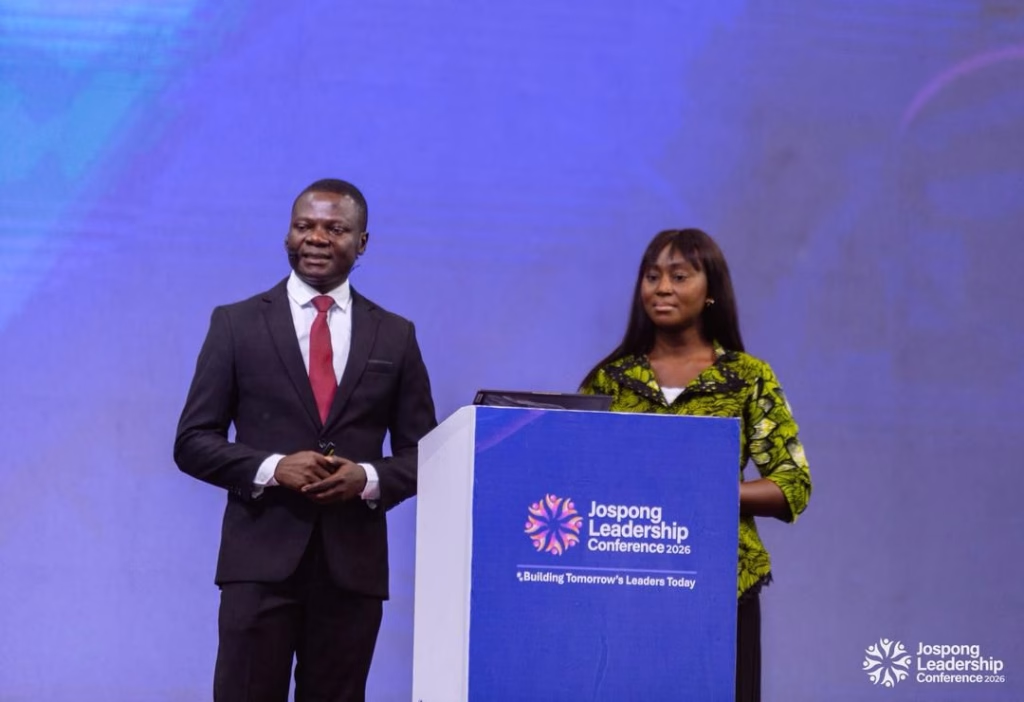
Co-presenting with Dr. Glenn Gyimah, Green Transition Limited’s General Manager, Dr. Kusi spoke during a session titled “The Frontier: Sustainability and Purpose-Driven Leadership”, which examined how today’s leadership decisions will determine organisational relevance in a rapidly greening global economy.
Dr. Gyimah challenged Jospong leaders to rethink their approach to waste management and environmental services. He argued that strategy alone is no longer enough; a paradigm shift is required—one that places sustainability, innovation, and long-term environmental thinking at the heart of leadership. He warned that the Group’s future hinges on its leaders’ ability to make bold, forward-looking sustainability choices aligned with global green transitions.
As part of the conference, Green Transition Limited announced the upcoming 2025 Sustainability Report, which, according to Dr. Gyimah, will document the Group’s growing footprint in environmental protection, climate action, and inclusive development.
Beyond waste management, the Jospong Group’s support for the SDGs spans several areas:
- Its sanitation and waste value chain contributes to SDG 6 (clean water and sanitation), SDG 11 (sustainable cities and communities), and SDG 12 (responsible consumption and production).
- Job creation initiatives, especially for youth and marginalized groups, advance SDG 8 (decent work and economic growth).
- Recycling and composting operations help achieve SDG 13 (climate action) by reducing landfill waste and greenhouse gas emissions.
- Additional impacts include skills transfer, technology localization, partnerships with local authorities and communities, and converting over 1,000 waste streams from fuel to electric energy.
Dr. Kusi noted that many of these sustainability stories often go untold, even though they are central to development.
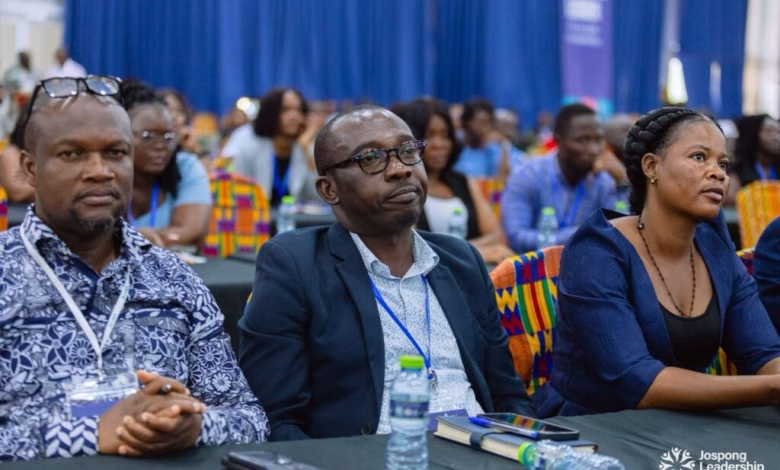
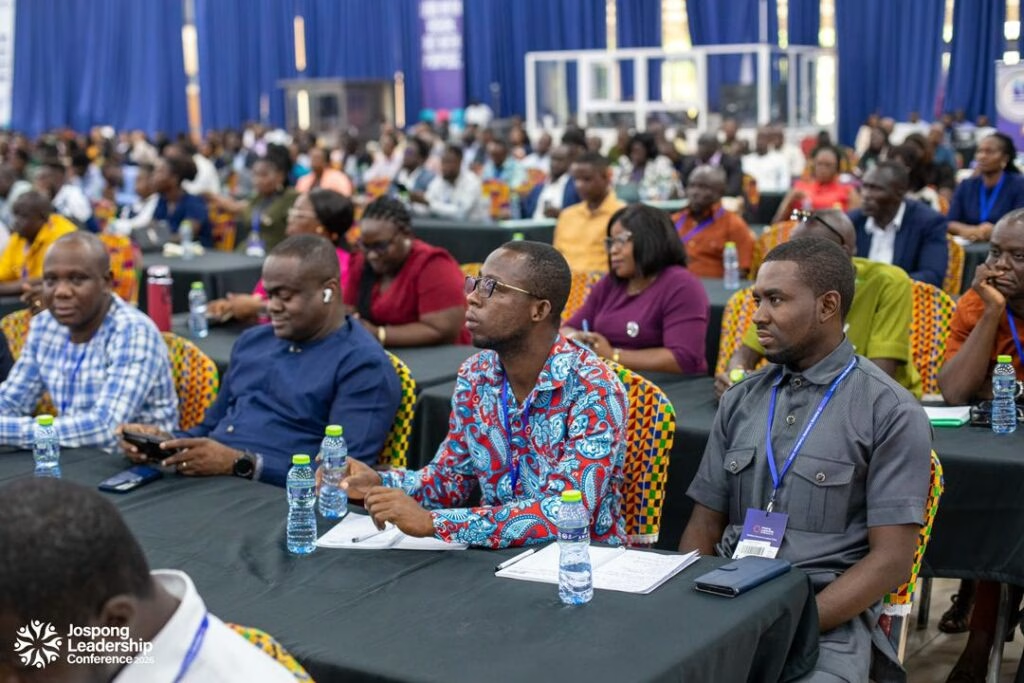
The Jospong Leadership Conference brought together executives, managers, and partners to reflect on leadership in a changing world. The key message: the future belongs to organisations that combine purpose with profit and leadership with responsibility.
Whether the world is paying enough attention remains uncertain, but as the presenters emphasized, the work is already underway—and it is making a positive impact for Ghana.