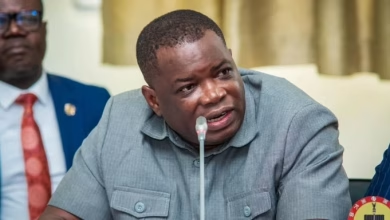
The Head of Finance at Merban Capital, Nelson Cudjoe Kuagbedzi, says the reduction of Ghana’s Monetary Policy Rate (MPR) to 18 percent sends a strong signal that will strengthen investor confidence, stimulate economic growth, and provide much-needed relief for the private sector.
According to him, the cut demonstrates the Bank of Ghana’s commitment to fostering a more supportive environment for private sector development.
Speaking to Citi Business News, Kuagbedzi explained that both domestic and international investors are likely to interpret the rate reduction as a sign of improving economic stability and clearer policy direction.
“The government plans to create 800,000 jobs next year, and the private sector will be central to achieving that. But for businesses to grow and contribute to job creation, they must have access to affordable financing,” he said.
“One of the key factors investors examine before investing in any economy is the cost of capital. So, as borrowing costs fall, we expect investor confidence to rise and economic activity to broaden.”
The Bank of Ghana recently lowered its policy rate by 350 basis points to 18 percent — one of the most significant monetary policy easing measures in recent years.
The Central Bank attributed the move to continued progress in reducing inflation, a stabilising cedi, and improving macroeconomic conditions, all of which have created room to support economic expansion.
The cut is also expected to gradually reduce lending rates, offering relief to businesses and households that have faced high borrowing costs.
Announcing the decision at a press briefing on Wednesday, November 26, 2025, Governor Dr. Johnson Asiama said the Monetary Policy Committee’s latest review shows that the economy has entered a phase of broad stability, supported by a strong recovery in the external sector.
“The Bank anticipates that inflation will remain close to the target into the first half of 2026. Risks that could push inflation off target have reduced significantly,” he said.
He added that Ghana’s external sector has seen a “remarkable turnaround,” providing stronger support for the Bank’s policy direction and flexibility.