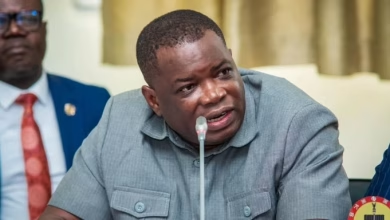

- Ghana Education Service halts the implementation of new PTA Guidelines
- Collection of PTA and development levies from parents is suspended with immediate effect
- Only parents/guardians of enrolled students can serve as PTA members; teacher involvement in levy collection banned
The Ghana Education Service (GES) has suspended the implementation of the new Parent-Teacher Association (PTA) Guidelines, including the collection of any levies.
In a statement, GES directed that all heads of senior high and technical schools, as well as PTAs, must not collect any PTA levies from parents or guardians until further notice. The directive is effective immediately and must be strictly followed. Regional and district education directors are responsible for communicating the suspension to all schools and ensuring compliance.
The PTA Guidelines had outlined that only parents or guardians with children enrolled in a school could serve as PTA members and executives. Executives at the basic level could serve two terms of two years each, while secondary-level executives could serve one two-year term. The guidelines also required PTA accounts to be audited annually by the Auditor-General, with reports submitted to the school management committee, district education officer, and regional education officer.
Checks and balances were also specified: school heads must approve any PTA cheque withdrawals, and teachers were prohibited from collecting levies or acting as signatories. Their role was limited to advising the PTA on academic and management matters. Crucially, a student’s access to education cannot be affected by a parent’s levy contribution.
The suspension follows reports that some second-cycle schools were illegally demanding and collecting PTA or development levies without authorization. GES clarified that no school is authorized to collect levies without prior approval. In basic schools, approval must come from the District Education Oversight Committee via the District Director of Education, and in second-cycle schools, from the Regional Director of Education.
Even with approval, all payments remain strictly voluntary, and no student should be denied school services for non-payment. Regional and district education directors have been tasked with monitoring compliance and reporting any violations for disciplinary action.
The statements were issued by Dr. Munawaru Issahaque, Acting Deputy Director-General in charge of Quality and Access, and Daniel Fenyi, Head of Public Relations at GES.