- Petrol fell by ~29%, diesel by ~15.5%, and LPG by ~18.7% year‑to‑date
- Fare reductions imposed earlier by transport unions may be reversed if fuel costs rise again
- Total taxes and levies now account for over 25–28% of ex‑pump prices
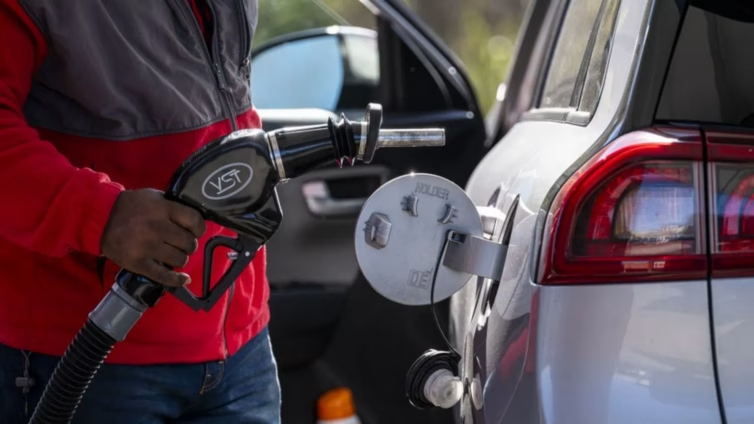
Fuel costs remain a major economic concern in Ghana, influencing transportation expenses and triggering ripple effects across various sectors. Typically, increases in fuel prices lead to fare hikes, while decreases prompt public calls for fare reductions.
In 2024, fuel prices averaged around GH₵15 per litre. Recently, however, pump prices at retail outlets have declined to between GH₵11 and GH₵14.
What’s Driving the Drop in Fuel Prices?
Since January 2025, petrol, diesel, and LPG prices have steadily fallen. This trend is largely due to two main factors: the strengthening of the Ghanaian cedi and a drop in international crude oil prices.
Oil Marketing Companies (OMCs) and Bulk Import Distribution and Export Companies (BIDECs) attribute the price reduction primarily to the cedi’s recent stability. According to the Chamber of Bulk Oil Distributors (CBOD), fuel prices have dropped below GH₵11 per litre for the first time since October 2022 — a significant decline from the GH₵18–GH₵23 highs during the cedi’s earlier depreciation.
By mid-July 2025, the cedi had appreciated by around 30%, moving from GH₵14.85/USD at the end of December 2024 to GH₵10.30/USD. This improvement was driven by stronger gold reserves, fiscal discipline, sound economic management, and favourable global market trends.
Global crude oil prices also saw a 10% quarter-on-quarter drop in Q2 2025 and a 16% year-on-year decline, contributing to pump price relief. Consequently, petrol, diesel, and LPG prices have dropped by 29.21%, 15.53%, and 18.72% respectively since the start of the year.
The downward trend was briefly disrupted by the Israel–Iran conflict, which raised oil prices due to threats of a blockade at the Strait of Hormuz. This prompted Ghana’s government to pause the rollout of a new fuel levy. Now that a ceasefire is in place, global prices are again trending downward.
Introduction of a New Fuel Levy
Despite the recent relief at the pumps, the government has implemented a GH₵1 per litre Energy Sector Shortfall and Debt Repayment Levy. The aim is to generate additional revenue—estimated at GH₵5.7 billion annually—to fund the purchase of liquid fuel for thermal power plants and address mounting energy sector debts.
However, the projected revenue falls short of the expected US$1.2 billion needed for fuel procurement in 2025 (approximately GH₵12.6 billion at an exchange rate of US$1 = GH₵10.5). To fill this gap, the Ministry of Finance will provide supplementary funding.
The government has clarified that this levy is open-ended, with no expiry date. It forms part of a broader roadmap aimed at tackling structural issues in the energy sector, such as clearing legacy debt, managing gas supply costs, and improving procurement efficiency. A monitoring framework will be put in place to assess the levy’s impact, with periodic audits to ensure transparency and accountability.
Immediate Impact on Fuel Prices
Following the Ghana Revenue Authority’s (GRA) directive on July 16, 2025, major oil retailers quickly adjusted prices:
- Goil: Petrol rose from GH₵12.07 to GH₵12.88; Diesel from GH₵13.20 to GH₵14.38
- Star Oil: Petrol increased to GH₵12.59 (some outlets at GH₵11.99); Diesel now sells at GH₵13.99 (some at GH₵13.79)
Transport Fares and Public Reaction
The Ghana Private Road Transport Union (GPRTU), which had previously ordered a 15% fare reduction in May due to falling fuel prices, is closely monitoring the situation. If fuel costs continue to rise, the union may push for fare increases.
The Chamber of Oil Marketing Companies (COMAC) noted that without the new levy, fuel prices would have dropped by an additional 2%–3% in July’s second pricing window.
Tax Composition and Growing Concerns
The CBOD reports that the following taxes and levies now apply to fuel:
- Energy Sector Shortfall and Debt Repayment Levy
- Road Fund Levy
- Energy Fund Levy
- Primary Distribution Margin
- BOST Margin
- Fuel Marking Margin
- Special Petroleum Tax
- Unified Petroleum Price Fund (UPPF)
- Distribution/Promotion Margin
These taxes make up 28.36% of petrol, 24.92% of diesel, and 15.23% of LPG prices during the first July pricing window.
Energy advocates like the Chamber of Petroleum Consumers (COPEC) have called for a review, estimating that taxes make up around 26.55% of retail fuel prices. They also projected a 6%–9% price increase due to the new levy—an estimate that has now come to pass.
Balancing Policy and Public Burden
Governments in Ghana have long relied on fuel taxes to address fiscal gaps and energy sector challenges. However, the increasing tax burden has raised concerns about the long-term viability of this strategy.
In the 2025 Mid-Year Budget Review, Finance Minister Dr. Cassiel Ato Forson noted that the energy sector faces annual financing shortfalls exceeding US$1.5 billion. The revised Energy Sector Levies Act, which introduced the new GH₵1 tax, is projected to raise an additional GH₵2.9 billion, pushing total revenue projections to GH₵229.9 billion.
As of March 2025, Ghana’s energy sector debt stood at US$3.1 billion, encompassing obligations to independent power producers, state-owned enterprises, and fuel suppliers.
Yet, despite the clear financial needs, the public continues to bear the brunt of multiple levies—without seeing clear improvements in energy sector stability. Past efforts to clear legacy debt through levies have not yielded the desired financial turnaround, raising doubts about the effectiveness and accountability of such measures.
Looking Ahead: Reform or Relapse?
Consumer groups like COPEC and GPRTU are now demanding more transparency, defined implementation timelines, and clear outcomes for the new levy. As the first August pricing window nears, there is growing concern that the levy could cause another round of fuel price hikes, potentially eroding recent consumer relief.
For Ghana’s energy sector reforms to be both credible and sustainable, the country must reduce its over-reliance on petroleum taxes and adopt a more diversified and balanced funding strategy—one that prioritizes efficiency, accountability, and public trust.