
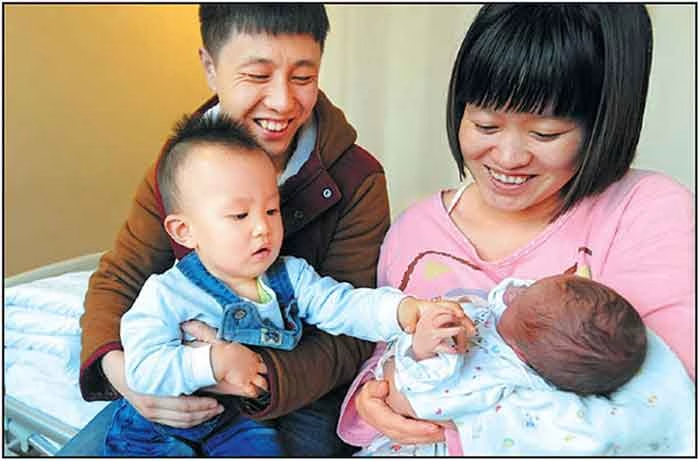
- Parents in China to receive ¥3,600 ($500) yearly per child under age 3
- Policy aims to curb declining birth rates post-one-child policy era
- Around 20 million families expected to benefit
In a nationwide effort to address its declining birth rate, the Chinese government has introduced a new subsidy offering parents 3,600 yuan (approximately £375 or $500) annually for each child under the age of three.
This marks the country’s first national-level initiative aimed at encouraging childbirth, nearly a decade after the Communist Party ended its one-child policy.
According to state media, the financial assistance will benefit around 20 million families by easing the financial burden of raising young children.
Although various provinces had previously introduced similar incentives on a smaller scale, the new scheme represents a more coordinated response to China’s growing demographic challenges. The program, announced on Monday, allows for a total payout of up to 10,800 yuan per child and will be applied retroactively from the beginning of 2024. Families with children born between 2022 and 2024 can also apply for partial benefits.
This move builds on a wave of local measures aimed at boosting birth rates. In March, the city of Hohhot began offering up to 100,000 yuan per child to couples with three or more children. In Shenyang, families with a third child under three years old receive 500 yuan monthly.
Beijing has also recently urged regional governments to develop plans for free preschool education.
A study by the YuWa Population Research Institute highlights the high costs of raising children in China—estimated at an average of $75,700 to raise a child to age 17—making it one of the most expensive countries globally to start a family.
Official data released in January revealed that China’s population declined for the third consecutive year in 2024, with 9.54 million births recorded—a slight increase from the previous year, but not enough to offset the overall population decline.
With a population of 1.4 billion that is ageing rapidly, the country now faces mounting pressure to implement long-term solutions to its demographic crisis.