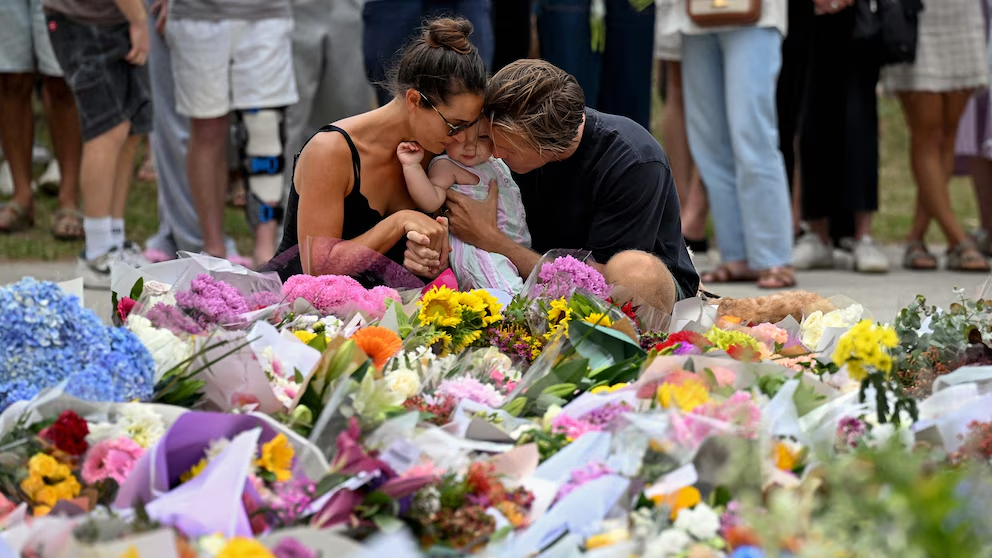
At least 15 people were killed and 42 others hospitalized after a father and son opened fire on a crowd at Bondi Beach in Sydney on Sunday during celebrations marking the start of Hanukkah.
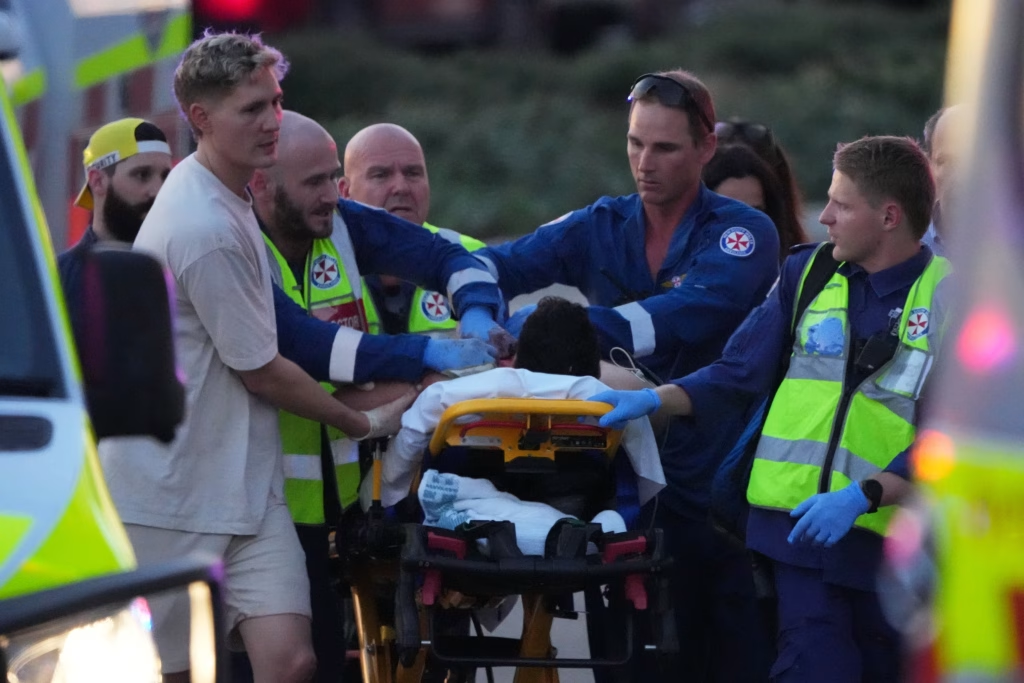
Australian Prime Minister Anthony Albanese described the attack as a “terrorist incident” that deliberately targeted Jewish Australians. Emergency services rushed victims from the scene as authorities launched a major security response.
Mass shootings are rare in Australia due to the country’s historically strict gun laws. However, the scale of Sunday’s attack has prompted renewed calls from Albanese and other leaders to strengthen existing firearm regulations.
Australia’s tough gun control framework dates back to the 1996 Port Arthur massacre in Tasmania, where 35 people were killed. In response, the government introduced the National Firearms Agreement (NFA), which restricted semi-automatic weapons, launched a nationwide gun buyback program, and unified firearm laws across states and territories. More than 650,000 guns were surrendered under the scheme, and Australia went more than two decades without a mass shooting.
Albanese said the reforms introduced by the Howard government were a “proud moment” that significantly improved public safety. However, gun ownership has gradually increased in recent years, with more than 4 million firearms now in circulation—about 25% higher than in 1996. Policy groups say some provisions of the NFA have been inconsistently enforced or weakened over time.
In response to Sunday’s shooting, Albanese and state and territory leaders agreed to pursue tougher measures, including renegotiating the National Firearms Agreement, fast-tracking a National Firearms Register, strengthening background checks using criminal intelligence, limiting the number and types of guns individuals can own, restricting firearm modifications, tightening customs controls, and reaffirming the national firearms amnesty.
Officials also said only Australian citizens should be eligible for firearms licences.
Authorities revealed that the son had previously come to the attention of Australia’s intelligence services in 2019 over suspected links to an Islamic State-related cell in Sydney. The son is an Australian-born citizen, while the father arrived in Australia on a student visa in 1998 and later became a permanent resident.
Australia’s ability to move quickly on gun reform is aided by the National Cabinet, a body made up of the prime minister and state and territory leaders. Although it does not pass laws, it allows governments to coordinate national responses and push reforms through their respective parliaments.
Public support for stronger gun laws remains high. A recent poll found that 64% of Australians favour tougher firearm regulations, while only 6% support easing them.
Walter Mikac, whose two daughters and wife were killed in the Port Arthur massacre, said the Sydney attack was a stark reminder of the need for continued vigilance.
“After Port Arthur, Australia made a collective commitment to put community safety first,” he said. “That commitment is as vital today as it was then.”