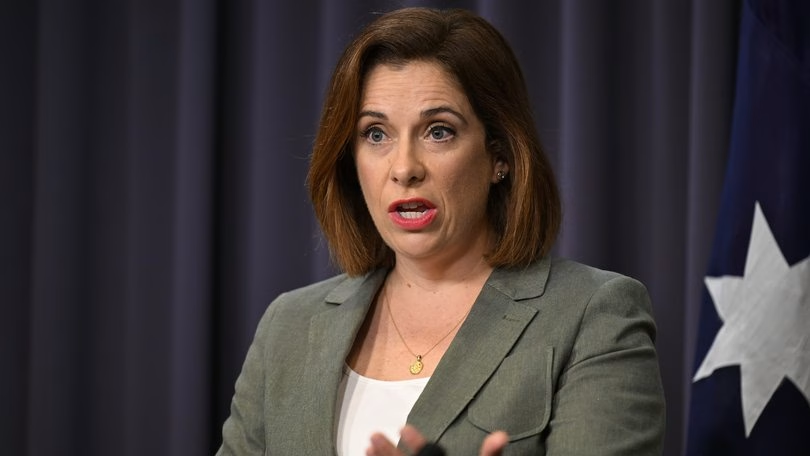
Australia’s Communications Minister, Anika Wells, has told the BBC she is unfazed by opposition from major tech companies to the country’s “world-leading” social media ban for children, and is prepared for any pushback from Washington.
Starting 10 December, ten platforms — including Snapchat, Meta, TikTok and YouTube — will be required to take “reasonable steps” to prevent users under 16 from creating accounts.
“We stand firmly with parents, not the platforms,” Wells said.
While companies like Meta acknowledge the need for stronger online safety measures, they argue that a blanket ban is not the best solution — a view echoed by some experts.
Speaking from Brisbane, Wells said tech firms have had 15–20 years to improve safety, citing research showing the harm their platforms can cause. “I’m not intimidated by big tech because I know the moral imperative behind this,” she said, adding that stories from parents whose children have been harmed online reinforce her resolve.
Wells described the policy as admired globally, claiming several world leaders have sought advice on replicating it. “We’re pleased to be the first, proud to be the first, and ready to help any jurisdiction that wants to follow.”
However, US President Donald Trump has previously vowed to defend American tech firms, and Australia’s e-Safety Commissioner — responsible for enforcing the ban — has been summoned to testify before the US Congress. Wells said the White House and Congress are entitled to scrutinise Australia’s actions, but stressed her government will stay focused: “Our duty is to Australians and taxpayers who expect good public policy.”
She added that tech companies should indeed be worried, given the possibility that Australia could inspire a global wave of similar restrictions. “If your operating model isn’t safe and people are losing their lives as a result, public policymakers will act.”
Despite strong public support, the legislation has drawn criticism. Some experts argue that greater controls, stronger age-verification tools and better digital education might have been more effective. Similar laws overseas have faced enforcement challenges, including in the US, where courts have blocked several state-level attempts. In Australia, two teenagers have already taken the ban to the High Court, claiming it violates children’s rights.
A major point of criticism has been the exemption of online gaming, which parents and safety advocates say can be equally harmful. Roblox has been cited in particular. Wells said the e-Safety Commissioner “has her eye on Roblox,” noting that the platform has recently announced safety improvements.
The government will review the policy over the next two years. “This isn’t a cure; it’s a treatment plan,” Wells said, noting that adjustments will be made as needed.
She also acknowledged the rollout may be “messy,” but insisted the long-term social benefits will be worth it, comparing it to under-18 alcohol restrictions: some will break the rules, but the law remains justified by public health evidence.
Wells, a mother of three, admitted that managing screen time in her own home is challenging — a task that often falls to her husband due to her job’s travel demands. “In a way, being the lawmaker behind this ban is my contribution to those battles,” she said, adding that many parents have thanked her for pushing the policy.