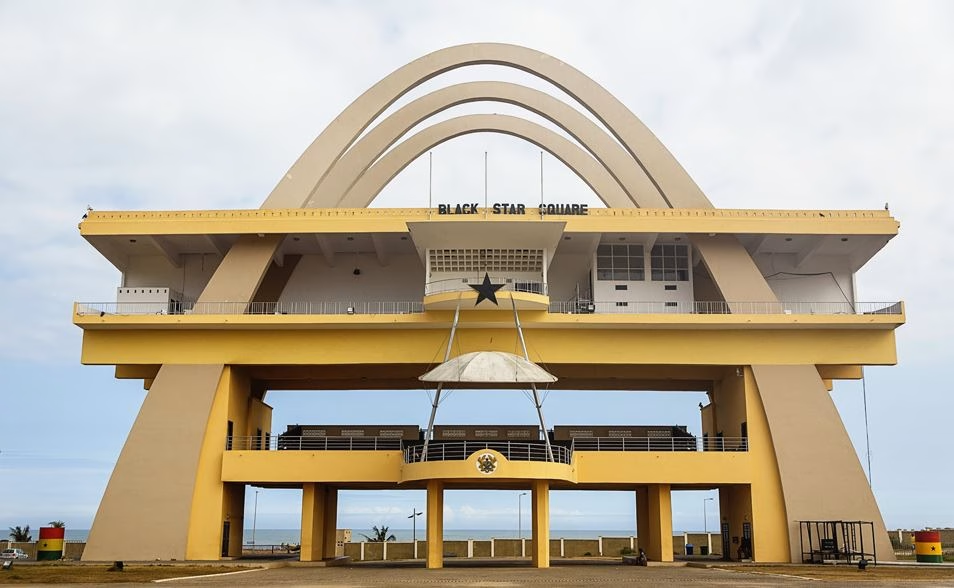
Deep in West Africa, between the arid Sahara Desert and verdant forests, thrived the ancient Kingdom of Ghana.
From the 8th to the 11th century, this remarkable empire stood as a powerful nexus of wealth and trade, leaving an enduring impact on African history.

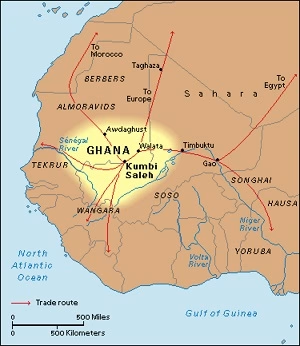
At its peak, Ghana was a bustling trade hub, strategically positioned between the gold-rich regions to the south and the salt mines of the Sahara to the north.
The exchange of these valuable resources fueled the kingdom’s prosperity and attracted traders from across Africa and beyond.
Under its formidable rulers, known as the Ghana Emperors, the kingdom amassed immense wealth and wielded considerable influence.
By controlling crucial trade routes and imposing taxes on passing merchants, the emperors expanded their wealth and power.

Beyond its economic success, the Kingdom of Ghana was a vibrant cultural and political center, with lively cities, advanced governance, and a rich oral tradition celebrating its achievements.
The capital, Koumbi Saleh, was a dynamic metropolis where merchants, scholars, and artisans mingled, exchanging goods and ideas.
Ghana’s legacy continued to shape West Africa’s socio-economic landscape, laying the groundwork for later empires such as Mali and Songhai.
Though the physical remnants of ancient Ghana have largely vanished, ongoing archaeological work and historical research keep its story alive. Enthusiasts and scholars remained fascinated by its past, eager to explore its contributions to Africa’s rich tapestry of civilizations.

As the sun sets on the ancient Kingdom of Ghana, its legacy endured as a symbol of the ingenuity, resilience, and ambition of its people.
From its bustling marketplaces to its powerful rulers, Ghana stands as a beacon of inspiration for future generations.