- Sam George announces plans to engage stakeholders on DTT funding
- Original phased payment plan for TV stations was never enforced
- Legal challenge by GIBA halted fee implementation
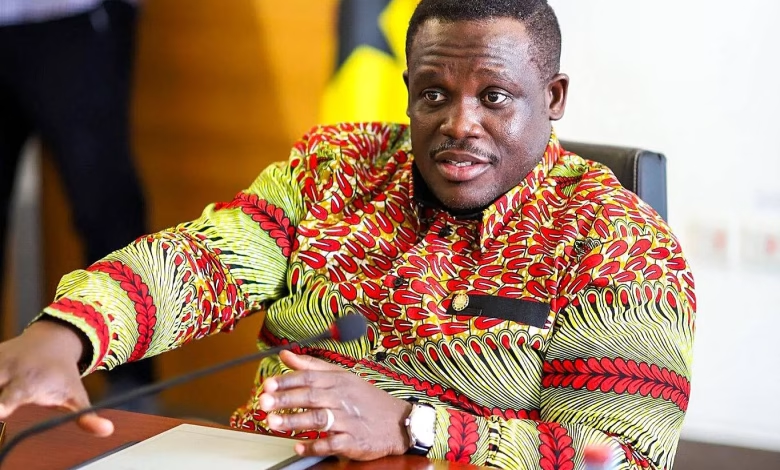
The Minister for Communication, Digital Innovation and Technology, Sam George, has revealed that the government will soon initiate discussions with stakeholders to develop a sustainable funding model for Ghana’s Digital Terrestrial Television (DTT) transmission network.
The DTT platform, launched in 2016 under then-Minister Edward Omane Boamah, was initially based on a cost-sharing framework. Under the original plan, TV stations were to receive free access in the first year, pay 50% of the fees in the second year, 75% in the third, and eventually cover the full cost.
However, speaking at the “Broadcasting at the Crossroads” forum organised by the Africa Media Bureau at the Alisa Hotel on Friday, September 26, 2025, Minister George stated that this policy was never fully enforced.
A previous attempt by an earlier administration to introduce user fees was legally challenged by the Ghana Independent Broadcasters Association (GIBA). As a result, over 45 stations currently using the DTT platform have not contributed to its operational or maintenance costs for nearly ten years.
Minister George emphasised that the government has been bearing the full cost of operating the platform, effectively subsidising private broadcasters — a situation he described as no longer sustainable.
“The free ride bus is running out of gas, and we need a sustainable way to fuel the DTT bus,” he remarked.
He also noted that with increasing demand for space on the platform, the government is planning to expand capacity. Simultaneously, it will engage broadcasters in discussions on how they can help fund the service and ensure its long-term viability.
A stakeholder meeting will be held soon to establish a practical cost-sharing approach to maintain and grow the DTT ecosystem.