- Asenayo Forest Reserve successfully reclaimed from illegal miners
- Eighth of nine "red-zoned" reserves restored under government initiative
- Inter-agency collaboration (Forestry Commission, military, police) praised for effectiveness
In its continued efforts to combat illegal mining and protect Ghana’s forests and water bodies, the government has achieved a major milestone with the successful reclamation of the Asenayo Forest Reserve.
This accomplishment is the result of coordinated operations led by the Forestry Commission, in partnership with security agencies, under the Ministry of Lands and Natural Resources.
The reclamation of Asenayo marks the eighth of nine high-priority “red-zoned” reserves to be cleared of illegal miners, reinforcing the government’s firm stance against galamsey.
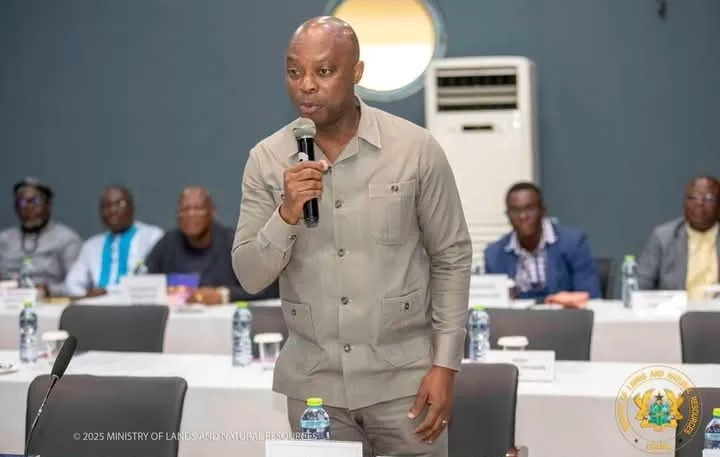
Dr. Hugh Brown, Chief Executive Officer of the Forestry Commission, made the announcement during a recent inter-agency retreat hosted by the Ministry of Lands and Natural Resources. He praised the success as evidence of the power of inter-agency collaboration.
The Asenayo reserve, once ravaged by illegal mining, has now been fully secured and placed under state protection. This achievement highlights the government’s ongoing dedication to safeguarding Ghana’s vital forest resources, building on prior successes under the leadership of Minister Emmanuel Armah-Kofi Buah, who confirmed the restoration of seven other reserves through joint military, police, and Forestry Commission efforts.
The government’s strategic reclamation approach—combining intelligence-driven enforcement, community engagement, and ecological restoration—has become a model for sustainable resource management.
With only one reserve left under illegal occupation, the Ministry reaffirmed its commitment to full recovery, stating, “No forest land will be surrendered to criminals.”
“We are mobilizing all resources to reclaim the final target and ensure the lasting protection of these crucial ecosystems,” the Ministry added.