- Emmanuel Mensah criticises Ghana’s delayed response to global trade disruptions
- U.S.-China trade war continues to affect global supply chains and trade dynamics
- Mensah calls for proactive trade intelligence systems beyond domestic data collection
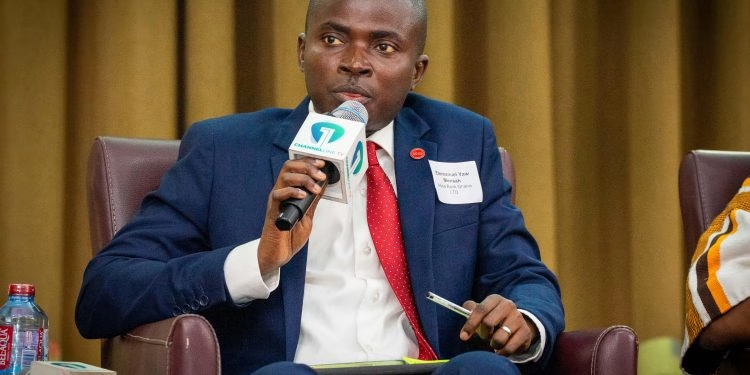
Emmanuel Mensah, Head of Trade and Working Capital at Absa Bank Ghana, has criticised Ghana’s slow and inadequate response to the ongoing U.S.-China trade war, urging immediate reforms in the country’s approach to global economic monitoring. Speaking at the Citi Business Forum on Thursday, June 12, 2025, under the theme “The Global Tariffs Dispute: Navigating Ghana’s Recovery Strategy,” Mensah expressed concern over Ghana’s lack of a coherent strategy to address the ripple effects of intensifying global trade tensions.
“We’ve experienced similar trade tensions in the past, yet we continue to delay when it comes to formulating timely strategies to manage these geopolitical shifts,” he remarked.
The trade war between the United States and China—initially triggered by tariff impositions during the Trump administration—has significantly reshaped global trade, disrupting supply chains and altering commerce patterns across multiple economies.
Mensah stressed that developing countries like Ghana cannot afford to remain spectators amid such global volatility. He called for urgent investment in real-time trade intelligence systems that go beyond domestic data collection.
“We must build trade intelligence capabilities. The Ghana Statistical Service is doing its part, but it’s not enough to only track internal data. We need to pay attention to global trends—what’s happening in other economies—and let that information shape our policies,” he asserted.
He warned that Ghana’s reactive posture to external economic shocks exposes the nation to lost opportunities and unforeseen risks. As Ghana works to stabilise its economy post-crisis, Mensah urged policymakers to adopt a forward-looking strategy that integrates global trade insights into national planning.
“If we had the right systems in place and used them to inform our economic decisions, we wouldn’t be as exposed as we are now. We’re entangled in this situation largely because we weren’t prepared to respond effectively,” he concluded.