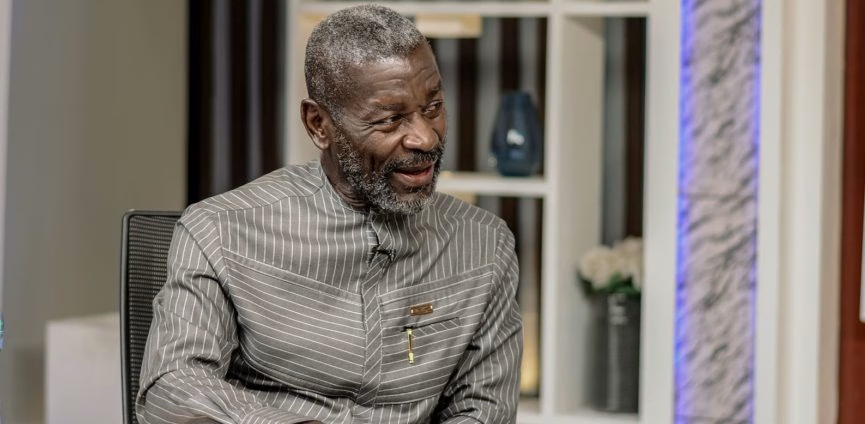
Prince Kofi Amoabeng, founder of the defunct UT Bank, has urged President John Dramani Mahama to adopt a bold, non-partisan national strategy aimed at intentionally developing at least 10 Ghanaian billionaires who can serve as major economic anchors for the country.
Speaking at the Fourth First National Bank (FNB) Head of State Invitational Golf Tournament at the Achimota Golf Club last Friday, Amoabeng argued that targeted government backing for competent and trustworthy entrepreneurs is crucial for driving rapid economic growth, reducing poverty, and strengthening Ghana’s global economic presence.
A “Deliberate” Billionaire Strategy
Amoabeng’s proposal breaks from conventional economic policy by calling on the government to actively identify and support high-potential business leaders. Drawing from his experience in the financial sector and Ghana’s regulatory clean-up, he emphasized that such support must be based on merit, integrity, and compliance—not political affiliation.
“My suggestion is that beyond providing employment opportunities for the poor, we should intentionally create at least 10 millionaires or billionaires in Ghana,” he said.
He further outlined how this could be achieved:
“Select young, honest taxpayers with solid business foundations and deliberately support them with grants, contracts, and opportunities. This will help them grow, compete globally, and promote Ghana internationally.”
Amoabeng stressed the need to move past the “pull-him-down syndrome” that limits local success. He urged the President to empower “genuine business people” across political lines to help propel national development.
“So, Mr President, look beyond NDC members and identify genuine entrepreneurs who can succeed for the good of our country,” he added.
Commendation for Economic Progress and the 24-Hour Policy
The former banker also praised the government for restoring a “renewed national sense of hope” and cited improvements in inflation, interest rates, and the Cedi’s performance.
He applauded the 24-hour economy initiative, adding a practical interpretation: “When you accept you are poor, and rich people are still awake working late, you don’t sleep either. That’s how I understand it.”